
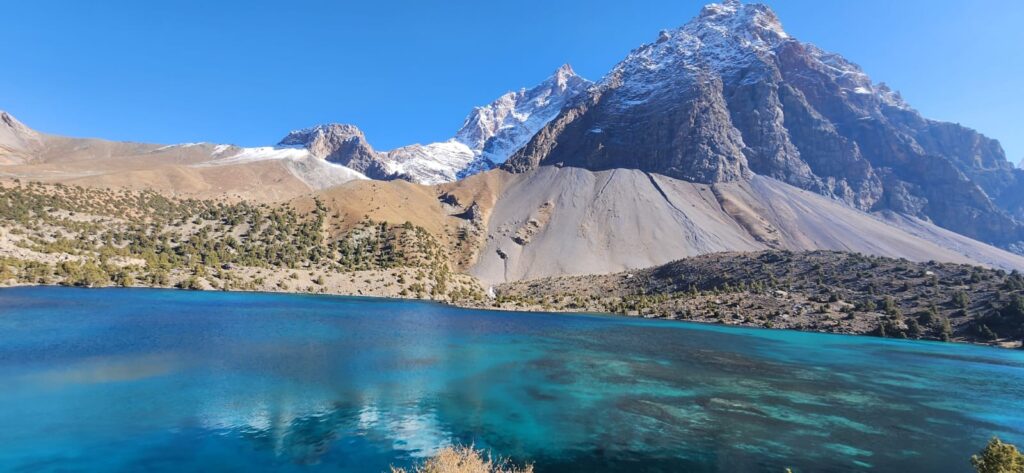
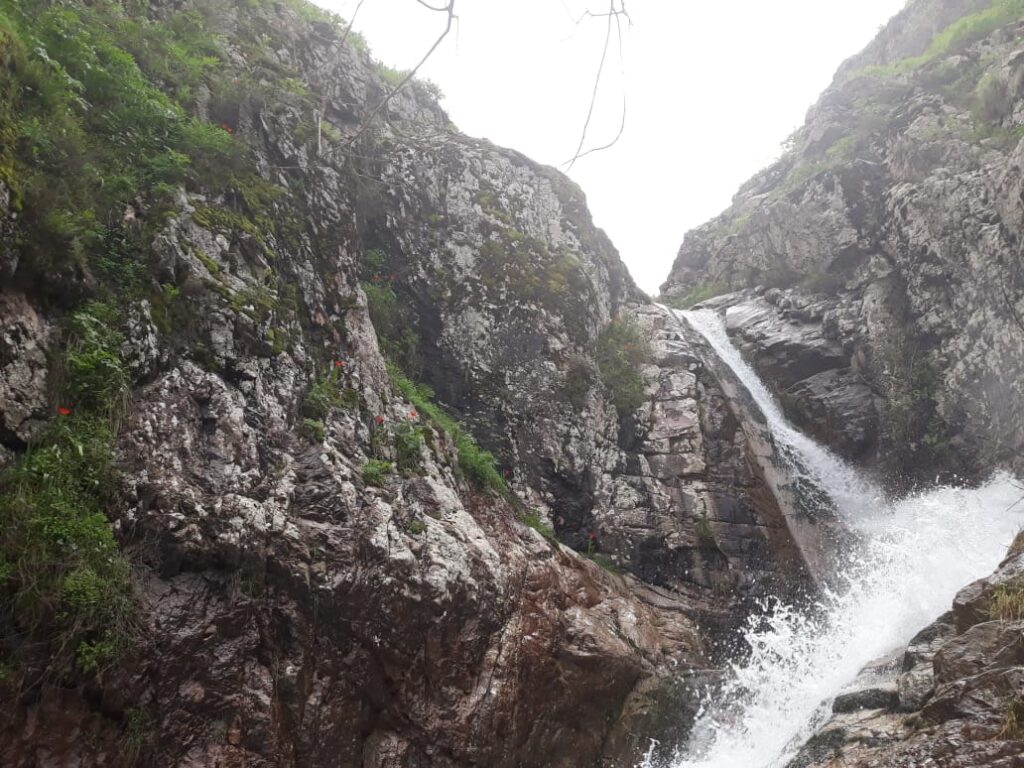
The Vakhsh Valley lies at the center of Tajikistan’s agricultural heartland—a long, sunlit corridor stretching south from the foothills near Danghara to the Afghan border. It is a place of abundance and unease. Here, the geography that makes farming possible also makes it precarious. Fertile alluvial soils spread across ancient river terraces; snowmelt from the Pamirs feeds a network of canals that shimmer across the plains. But every advantage hides a risk: floods, salinization, drought, erosion, and the slow exhaustion of soil that has been cultivated without pause since the 1930s. To understand agriculture in the Vakhsh is to trace a balance between natural bounty and the physics of decline.
The valley’s form determines its fate. The Vakhsh River cuts through soft loess and alluvial fans before merging with the Amu Darya. Its gradient is steep, its floodplain narrow, and its soils young—ideal for irrigation, but unstable. When Soviet engineers built the great canal systems in the 1940s and 1950s, they saw the valley as a blank slate: water could be tamed, land leveled, and productivity multiplied. Cotton fields replaced steppe and scrub. By the 1970s, the Vakhsh had become a landscape of canals, collectors, and pumping stations, feeding some of the highest per-hectare yields in Central Asia (Micklin, 2007).
Yet geography resists design. The same fine soils that yielded record harvests were easily waterlogged. Subsurface drainage lagged behind expansion, and the shallow groundwater table began to rise. By the 1980s, entire districts showed salt efflorescence—white crusts glinting between furrows. In low-lying fields, cotton wilted and wheat yellowed. Even as engineers built more pumps, the valley was turning against itself.
The Vakhsh is an engineered landscape on borrowed gradients. Water must move perfectly—or it will not move at all.
Today, that fragility has become more complex. Climate change adds a new layer of uncertainty. Warmer winters mean less snowpack in feeder basins and earlier runoff peaks. By July, when irrigation demand is highest, flow rates may already be declining. In dry years, such as 2018 and 2021, reservoir levels at Nurek dropped below critical thresholds, forcing rationed water deliveries downstream (Kayumov, 2021). When supply falters, farmers overdraw from canals and wells, concentrating salts near the surface and accelerating soil degradation.
In the lower valley near Bokhtar, farmers describe how the land’s “breath” has changed. “Before, water would come steady,” one farmer explained. “Now it comes in a rush, then sleeps.” His metaphor captures a hydrological truth: irrigation pulses are more erratic, shaped by upstream storage, power demand, and glacier-fed variability. The timing mismatch between river and field is widening.
Erosion is another slow hazard. On the foothills where new terraces expand, rainstorms gouge gullies into bare slopes. Sediment then clogs canals downstream, reducing conveyance and forcing repeated dredging. In 2019, a single summer storm dumped more than 150,000 cubic meters of silt into the lower Vakhsh collector network, according to Tajik Hydromet data. The valley’s productivity depends not just on water but on constant maintenance—shovels, dredgers, and a choreography of repair that repeats each spring.
Agriculture here is not a stable geography but a perpetual reconstruction: every harvest sits atop the residue of the last flood, the last drought, the last repair.
Despite these challenges, the Vakhsh remains vital. It produces more than 40 percent of Tajikistan’s cotton, half of its vegetables, and much of its early wheat. The same irrigation systems that threaten sustainability also sustain national food security. Farmers adapt where they can. Some alternate cotton with cereals to rest the soil; others shift to drip irrigation on smaller plots. Experimental farms near Qurghonteppa test salt-tolerant wheat and sunflower varieties, while local water user associations attempt to coordinate canal maintenance that once fell to state planners.
Infrastructure risk overlaps with natural risk. Canals depend on pumps powered by hydropower plants, which in turn depend on water flow. When electricity shortages hit during winter, pumps stall, leaving early crops unwatered. When heavy rains fall on degraded soils, the water runs off instead of infiltrating, flooding villages. Each node in this chain reflects the valley’s tightly coupled geography—hydrology, soil, and human systems intertwined.
Geologists warn that the valley’s lower sections are also prone to liquefaction during earthquakes. The same loose sediments that make fertile topsoil can turn unstable when shaken. In 1989, a moderate quake near Kolkhozobod caused minor cracking in canal embankments—an omen of what a stronger tremor could bring. “The river is patient,” said an engineer who worked on the Nurek project, “but the land remembers every change we make to it.”
Satellite imagery tells a mixed story. Between 2000 and 2020, vegetation indices in the Vakhsh showed alternating pulses of recovery and decline. Drought years carved brown scars into the irrigated mosaic; wet years revived it in patches. The spatial pattern follows the micro-topography of the alluvial plain: higher, well-drained fields recover first; lower basins, often saline, lag behind. Geography decides resilience.
Recent adaptation projects echo older logic but with better science. The “Integrated Land Management in the Vakhsh Basin” program launched in 2020 introduced controlled drainage, canal lining, and soil moisture monitoring across several pilot districts (UNDP, 2022). Early results show 15–20 percent water savings and reduced salinity buildup. Still, scale remains a challenge. Out of nearly 300,000 hectares of irrigated land, only a fraction benefits from such improvements.
In the Vakhsh Valley, the line between sustainability and collapse is thin as a canal wall. Every year the valley must choose again between yield and longevity.
The future of this landscape depends on marrying the precision of engineering with the patience of geography. The river will continue to shift its load; the soils will continue to rise and settle. The task is not to freeze them into permanence but to guide their motion gently. For a valley born of sediment and flood, that may be the only stable form of resilience.
References
- Kayumov, A. (2021). Hydrological change and agricultural adaptation in Tajikistan’s irrigated plains. Dushanbe: Tajik Hydromet.
- Micklin, P. (2007). The Aral Sea disaster. Annual Review of Earth and Planetary Sciences, 35, 47–72.
- UNDP. (2022). Integrated Land Management in the Vakhsh Basin: Interim Results Report. Dushanbe: United Nations Development Programme.