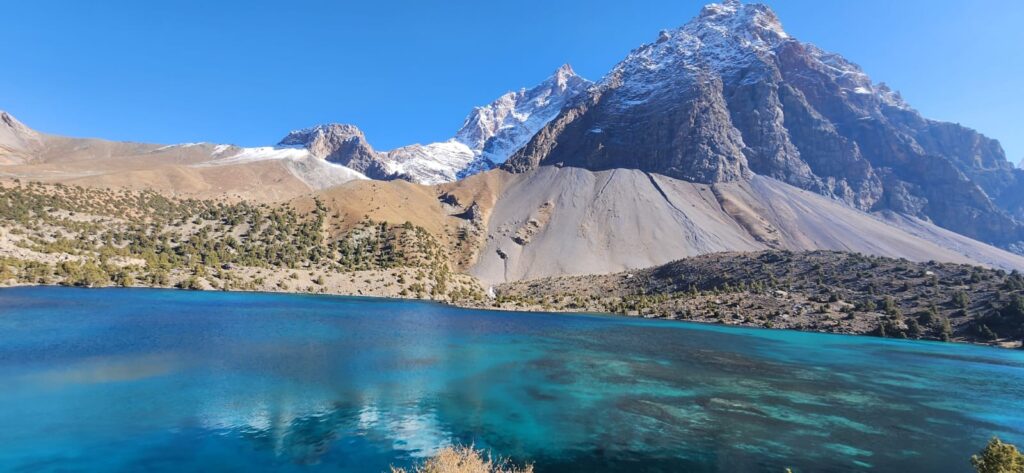
At over 5,000 meters in elevation, the glaciers of Tajikistan look eternal. Their white surfaces crown the Pamirs and feed every major river that sustains life below. Yet to scientists who have spent decades measuring them, the ice no longer feels timeless—it feels fragile, restless, and receding. Glacial monitoring in Tajikistan is a story of persistence: of instruments that freeze, of researchers who hike for days to retrieve data loggers, and of a country learning to watch its own vanishing water towers.
The origins of glacier observation in Tajikistan trace back to the 1930s, when Soviet surveyors first mapped the great Fedchenko Glacier—the longest glacier outside the polar regions. Its 77 kilometers of ice became a symbol of Soviet geographic prowess, studied for its flow rates, mass balance, and microclimate. The Fedchenko remains a centerpiece today, monitored through both satellite and in-situ programs coordinated by the Tajik Hydrometeorological Service. But what was once a monument to permanence is now a barometer of change.
On high ice, geography becomes time: each layer of snow is a year, each melt channel a record of rising heat.
Since the 1960s, glaciers in Tajikistan have lost an estimated 30 percent of their total area (Kayumov, 2010). The losses are uneven—faster in the western Pamirs and Gissar-Alay, slower in the highest central ranges—but the direction is clear. Remote sensing data from 1990 to 2020 show an acceleration of retreat, particularly among smaller valley glaciers below 4,500 meters (Shahgedanova et al., 2021). Field observations confirm what satellite pixels suggest: thinning ice, collapsing moraines, and a proliferation of glacial lakes where tongues once extended.
Monitoring these changes is both a scientific and logistical challenge. Instruments at 4,000 meters endure intense radiation, thin air, and isolation. Hydromet technicians travel by pack animal or on foot, carrying stakes, GPS units, and automatic weather sensors. Once installed, a single station may record air temperature, radiation, humidity, and ablation depth through the year. In summer, researchers return to measure the stakes, comparing exposed height to last year’s snowpack. Each centimeter tells a story of energy balance and melt rate.
Funding gaps often interrupt the sequence, leaving data discontinuous. In some valleys, local herders help safeguard the instruments, reporting when storms bury or break them. “We tell them to treat it like a small sheep,” one glaciologist said. “If it disappears, we know who to ask.” This partnership between science and local geography has become vital: the ice is remote, but its meltwater sustains the very people who help monitor it.
The physical geography of Tajikistan makes glacier observation especially consequential. The country’s rivers—the Vakhsh, Panj, Zeravshan—derive 60 to 80 percent of their annual flow from snow and glacier melt (Kayumov et al., 2015). When ice melts earlier in the season, water surges into rivers before crops need it; by late summer, canals run low. This temporal mismatch is not visible on the ice itself but is encoded in the hydrographs downstream. Each delayed or early melt becomes an agricultural risk hundreds of kilometers away.
To study glaciers in Tajikistan is to study the memory of water: how it stores winter in summer, and how that rhythm is breaking.
Technologically, glacier monitoring has entered a new phase. Automatic weather stations on Fedchenko, Garmo, and Grum-Grzhimailo glaciers now feed real-time data to Dushanbe through satellite uplink. Drones survey surface morphology; repeat satellite altimetry (ICESat-2, Sentinel-1) measures elevation change with sub-meter precision. Yet the human element remains irreplaceable. Instruments fail, batteries die, and snow buries reflectors. Fieldwork still defines credibility.
Recent studies reveal startling dynamics. In the central Pamirs, mass balance measurements between 2010 and 2020 show annual losses of 0.6–0.9 meters water equivalent (Shahgedanova et al., 2021). The smaller Garmo Glacier, which once fed tributaries of the Vakhsh, has retreated more than 800 meters since 1975. Even more concerning are the changes in ice hydrology: meltwater now flows through subglacial tunnels earlier in spring, destabilizing moraines and forming glacial lakes. Over 1,300 such lakes have been mapped nationwide (UNDP, 2022). Some—like Lake Grum or Zarafshon basin ponds—pose outburst risks that can destroy downstream villages in minutes.
Monitoring, therefore, is not only about measuring ice but about anticipating hazard. Tajik Hydromet, with support from the Swiss Agency for Development and Cooperation, has installed early warning systems in high-risk basins such as Barsem and Shakhdara. These stations track lake volume, temperature, and precipitation, transmitting alerts when thresholds are breached. In 2015, such a system prevented casualties during a partial dam failure in GBAO.
For glaciologists, each dataset is a fragile bridge across decades of work. “You cannot stop the ice,” said climatologist A. Kayumov, “but you can learn its language.” His team’s efforts to standardize glacial monitoring align Tajikistan with international programs like the Global Terrestrial Network for Glaciers (GTN-G). The country now contributes annual observations that feed into regional climate models for Central Asia.
Science on high ice is slow science. Every measurement demands patience measured in altitude: precision balanced against exhaustion, numbers collected in thin air.
The implications extend beyond research. Policymakers increasingly treat glacier data as a foundation for water planning, hydropower forecasting, and disaster risk assessment. The 2020 National Climate Adaptation Strategy lists glacial monitoring among its top priorities. Yet funding remains fragile—one lost instrument or canceled expedition can erase a year of data. “We are mapping disappearance,” said a young hydrologist at the Fedchenko base camp. “Our task is to make it visible before it is gone.”
Tajikistan’s glaciers may be shrinking, but the act of measuring them builds a different kind of endurance: a continuity of observation that outlasts political cycles. Each stake hammered into the ice is a declaration of attention, a refusal to let the highlands melt unseen.
References
- Kayumov, A. (2010). Climate change impact on water resources in Tajikistan. Dushanbe: Tajik Hydromet.
- Kayumov, A., Rajabov, I., & Mavlonov, K. (2015). Glacial hydrology and runoff shifts in Tajikistan. Center for Climate Studies, Dushanbe.
- Shahgedanova, M., Zemp, M., & Kayumov, A. (2021). Glacier mass balance in the Pamirs and Central Asia: 2010–2020 observations. Cryosphere Studies, 15(4), 2013–2035.
- UNDP. (2022). Strengthening climate resilience through glacial lake monitoring in Tajikistan. Dushanbe: United Nations Development Programme.