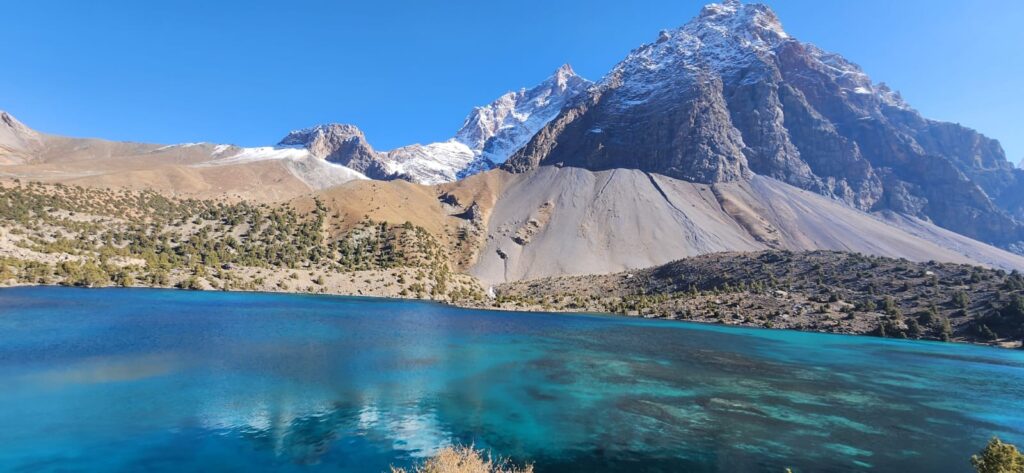
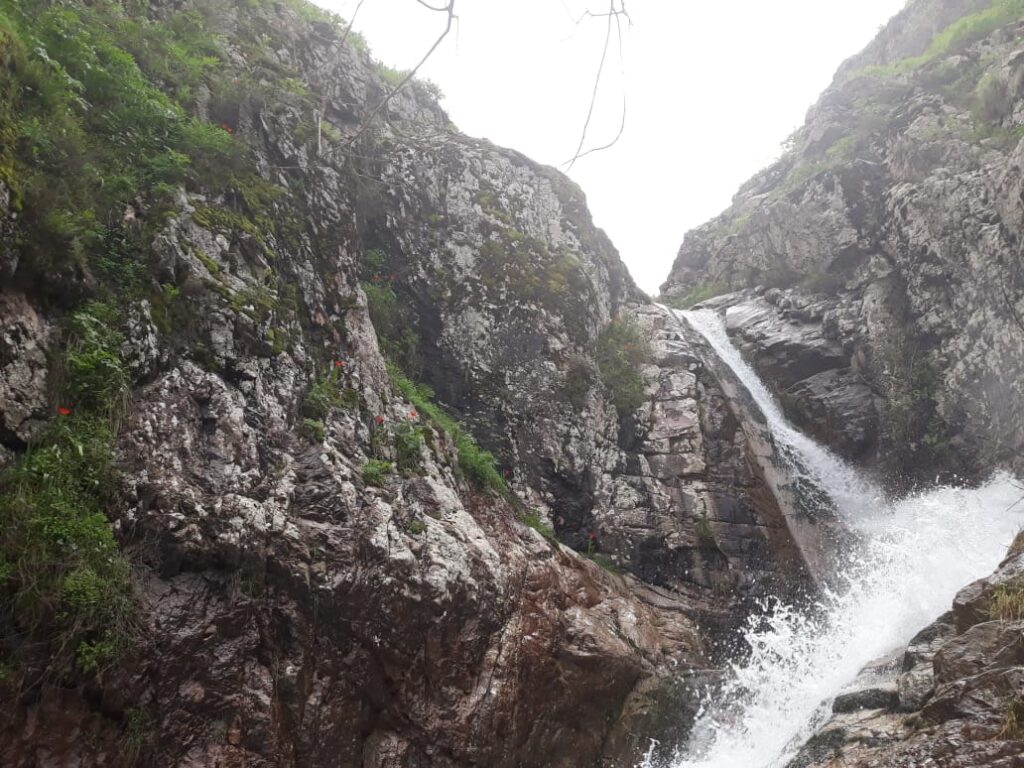
The Zeravshan Valley winds westward from the icy spurs of the Pamir-Alay toward the plains of Sughd, its river slicing through layers of loess, marl, and glacial debris. To most travelers it looks like a simple thread of green cutting through ochre hills, but beneath that surface lies one of Central Asia’s most intricate soil mosaics. The geography of the Zeravshan is written in texture, color, and grain: dark chestnut soils along ancient terraces; pale gray saline flats near the river’s end; mountain scree slowly weathering into life. To study the valley’s soils is to study the meeting point between geology, water, and cultivation.
For centuries, the Zeravshan has been both a source of fertility and a corridor of erosion. Its name, derived from Persian zar-afshan—“spreader of gold”—once described not only the river’s mineral riches but also the way it distributed fine sediments across the floodplain. Each spring flood renewed the valley’s skin. Today that rhythm is controlled by canals and dams, but the memory remains in the soils themselves, whose layered profiles tell stories of both abundance and exhaustion.
The earth here is a record keeper: each horizon a sediment of history, each salt crust a memory of overuse.
Soil scientists classify the valley’s terrain into three main zones. The upper Zeravshan, near Ayni and Panjakent, lies within a mountain climate. Here, brown and dark gray soils predominate—rich in humus, formed under juniper and shrub vegetation, and sensitive to erosion. Mid-valley soils, around Urmetan and Zafarobod, are irrigated loess plains, thick with silt loam and calcium carbonate. Downstream near Samarkand, the river’s floodplain grades into saline gray-brown soils where the natural drainage weakens. Across these gradients, altitude, water, and human pressure combine to shape fertility.
Field studies from the Tajik Soil Institute (Rahmonov et al., 2018) show a clear pattern of organic matter decline in cultivated plots over the last two decades. Average humus content has dropped from 2.1 percent to 1.5 percent—small numbers that represent major ecological change. The cause is not simply overuse but also loss of sediment input: irrigation infrastructure prevents the river from flooding naturally, cutting off the annual renewal that once sustained fertility. At the same time, continuous cropping—cotton, wheat, vegetables—extracts more nutrients than are returned through fertilizers.
Farmers experience these changes in tactile ways. “The soil used to smell sweet,” one farmer from Panjakent said. “Now it smells tired.” In his words lies a rural empiricism more precise than any laboratory metric. A handful of earth that no longer binds together tells a story of humus depletion, disrupted aggregation, and diminished life.
Soil degradation is not uniform. On upper terraces, wind erosion scrapes away fine particles, leaving gravelly surfaces that absorb less water. In lowland basins, rising groundwater leads to salinization. The collector-drainage system built in the 1970s still functions but leaks badly, and evapotranspiration concentrates salts. Shiny white crusts appear in summer, forcing farmers to shift plots or mix gypsum into the soil—a practice as old as irrigation itself. Studies estimate that 15–20 percent of irrigated land in Sughd now suffers from moderate salinity (Kayumov, 2016).
In the Zeravshan, fertility and fragility share the same geography: the more productive the soil, the thinner its margin of error.
Rehabilitation efforts in the mid-2010s sought to reverse the trend. The “Sustainable Land Management in the Zeravshan Basin” project introduced contour plowing, crop rotation, and green manure practices across pilot farms. Farmers planted alfalfa to fix nitrogen and reduce compaction, rotating fields back to cotton after two seasons. Within three years, soil organic carbon increased by 0.3 percent—enough to improve structure and reduce runoff (UNDP, 2019). Yet these successes are local. Scaling them across thousands of hectares requires coordination among water, energy, and agricultural authorities—something geography complicates. The valley spans multiple climatic and administrative zones, each with distinct needs.
The valley’s soils also mirror its hydrology. The Zeravshan River, once glacial-fed, now depends heavily on snowmelt and tributary springs. As glaciers in the Fan and Zarafshan ranges recede, sediment load decreases, altering both floodplain morphology and nutrient transport. Downstream farmers notice that “the water has lost its taste”—a folk way of saying it carries less suspended silt, less mineral richness. This impoverishment of the river’s chemistry trickles into the fields.
Modern mapping technologies reveal what older farmers have long known: soils are alive, and they move. Satellite imagery from 2000 to 2020 shows an expanding patchwork of light-toned eroded surfaces along the southern slopes—areas where vegetation loss exposes bare loess to wind (Shirokova et al., 2020). Conversely, some north-facing slopes show regeneration where reforestation projects anchor soil. These spatial dynamics illustrate how even subtle shifts in slope orientation and irrigation access can determine the fate of entire communities.
To walk across the Zeravshan Valley is to cross centuries of geomorphology: from mountain talus to field to salt flat, all within a day’s journey.
Soil conservation now depends on integrating local knowledge into modern management. Farmers who observe ants abandoning certain mounds know that salinity has reached a threshold; those who follow worm activity predict soil moisture better than meteorological bulletins. Such observations, often dismissed as anecdotal, align with measured data. Participatory mapping projects launched in 2021 encourage farmers to draw their own soil maps—linking language and land. The result is a more grounded form of geographic science, one that listens to the ground before sampling it.
The future of the Zeravshan’s soils will depend on water—how much arrives, when, and in what form. Climate projections suggest more erratic snowmelt and hotter summers, increasing evaporation. The valley’s geography will magnify these shifts: upper zones may experience gullying from intense rainfall, while lower plains face creeping salinity. Yet there is resilience in the diversity of the valley itself. From juniper forests to irrigated orchards, from loess terraces to gravel fans, each soil type offers lessons in adaptation. “You can’t change the earth,” a farmer once said, “but you can change how you touch it.”
In that sentence lies the essence of soil geography: endurance shaped by care, and care shaped by the land itself.
References
- Kayumov, A. (2016). Salinization and soil degradation trends in northern Tajikistan. Dushanbe: Tajik Hydromet.
- Rahmonov, R., Kurbonov, M., & Rajabov, I. (2018). Soil fertility decline and management practices in the Zeravshan Valley. Central Asian Geographical Journal, 14(2), 97–113.
- Shirokova, T., et al. (2020). Land degradation and vegetation trends in the Zeravshan basin derived from remote sensing. Environmental Earth Sciences, 79(8), 215–229.
- UNDP. (2019). Sustainable Land Management in the Zeravshan Basin: Final Project Report. Dushanbe: United Nations Development Programme.