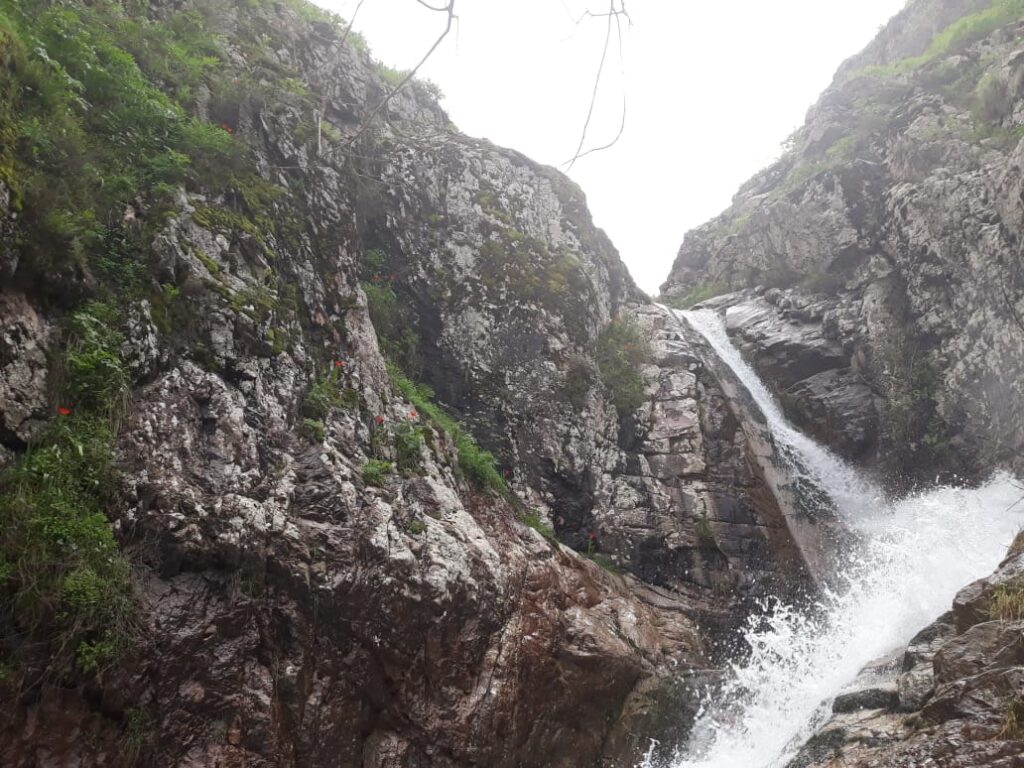
Beneath the sun-baked fields of Tajikistan lie the traces of another geography—one built not of asphalt and canals, but of tunnels, shafts, and whispers of flowing water. These are the qanats, or karez, ancient irrigation systems that once sustained oases and villages long before Soviet concrete channels drew straight lines across the land. In places like Hisor, Panjakent, and Kulyab, fragments of this subterranean network still pulse faintly beneath the surface. Each tunnel is both an engineering feat and an act of listening to the land.
Qanats originated in Persia thousands of years ago and spread through Central Asia with migrating farmers, traders, and empires. They capture groundwater from foothill aquifers and guide it gently downslope through underground galleries, emerging at the surface far below. Because they lose little to evaporation, qanats are perfectly suited to dry climates where water is precious. Their logic is geographical, not mechanical: to find balance between slope and seepage, between patience and flow. Tajikistan’s rugged relief made them essential. Long before pumps and dams, people mapped the invisible river beneath their feet.
The qanat is geography turned inside out—the mountain’s veins reversed to irrigate its own shadow.
Early Soviet hydrologists, mapping Central Asia in the 1920s and 1930s, found hundreds of qanats across what is now Tajikistan, particularly in the southern piedmonts of Khatlon and the Zeravshan basin. They recorded their total length in tens of kilometers, each gallery descending less than a meter per hundred. The slope was delicate, maintained by hand and eye. The builders read the terrain through instinct and experience, using wind direction, vegetation patterns, and the sound of the earth itself. “You can hear the water if you lie down,” one elder from Panjakent told researchers in the 1970s. “It hums like a sleeping snake.”
By mid-century, modernization overtook tradition. The Soviet irrigation campaigns that transformed the Vakhsh and Kofarnihon valleys viewed qanats as inefficient relics. Concrete canals and electric pumps could move water faster, straighter, and farther. Many qanats were abandoned or collapsed from disuse. Yet in isolated mountain communities—especially where groundwater remained near the surface—they endured. A 2014 survey by the Tajik Institute of Water Problems found 117 functioning qanats, some over a kilometer long (Rahmonov et al., 2016).
Unlike modern canals that depend on engines and dams, qanats depend on patience, gravity, and maintenance. They work only as long as communities remember them.
The physical geography that sustains qanats is subtle. In the loess foothills of Hisor and Shahrinav, the contact zones between gravel fans and fine silt layers form perched aquifers. Spring snowmelt recharges them, and horizontal infiltration provides a steady base flow. Builders dig mother wells at the aquifer’s edge and connect them through inclined tunnels supported by ventilation shafts. These shafts, spaced 10–20 meters apart, are visible as dotted lines across the landscape—maps of invisible water.
Restoration efforts in the 2010s brought renewed attention to these systems. The “Qanats as Cultural Heritage” project (UNESCO, 2018) documented remaining sites in Tajikistan and Uzbekistan, emphasizing their dual role as hydrological infrastructure and intangible heritage. At Chashma-i-Shifo near Hisor, engineers and villagers reopened a 400-meter qanat sealed since the 1960s. The water returned clear and cold, reviving nearby orchards. Local children began calling it “the old pipe,” unaware that its curve and gradient predate the Soviet Union.
Every restored qanat is a conversation between centuries: ancient geometry meeting modern need.
Hydrologically, qanats provide advantages that modern canals cannot easily replicate. Because their flow is underground, they avoid evaporation losses of 20–30 percent typical in open channels (Kayumov, 2015). Their discharge is self-regulating—rising in spring as groundwater refills and falling in late summer. They do not flood or silt up easily. But their fragility lies in neglect: without regular cleaning, sediment accumulates and galleries collapse. The craft of muqannis, the diggers who maintain them, is vanishing. Fewer than two dozen trained specialists remain in Tajikistan today, most over the age of fifty (Rahmonov et al., 2016).
The spatial pattern of qanats reflects older geographies of settlement. Villages lie not directly on rivers but along ancient flow lines—zones where groundwater is close yet safe from flood. Many shrines and cemeteries align with these lines, marking water as sacred. “Our ancestors lived between river and rock,” said a farmer from Ayni. “Too close to water, you drown. Too far, you thirst. The qanat was the middle way.”
Modern hydrologists now study qanats for lessons in sustainable design. Their low-energy operation, minimal disturbance of groundwater balance, and community management model align with contemporary ideas of resilience. In several pilot projects in Kulyab and Hisor, engineers have combined old and new methods—reviving qanats to supplement pump irrigation. Results show that blending the systems reduces pressure on wells and stabilizes water tables (UNDP, 2020).
Geography keeps score. Where qanats endure, groundwater remains steady. Where they vanish, wells deepen, and rivers dry sooner in summer.
These quiet tunnels remind Tajikistan of a time when geography dictated pace rather than output. They also remind science of humility: that centuries of empirical observation can produce designs more sustainable than a decade of engineering. In an age of climate uncertainty, when every drop must be counted, qanats offer a geometry of balance—one measured not in meters per second but in seasons per life.
References
- Kayumov, A. (2015). Traditional water management and irrigation efficiency in Tajikistan. Hydrological Studies of Central Asia, 12(3), 45–56.
- Rahmonov, R., Kurbonov, M., & Rajabov, I. (2016). Inventory and evaluation of traditional qanat systems in Tajikistan. Central Asian Journal of Water and Heritage, 5(2), 111–129.
- UNESCO. (2018). Qanats as Cultural Heritage of Central Asia: Field Documentation Report. Paris: UNESCO.
- UNDP. (2020). Integrating Traditional Irrigation Knowledge for Modern Water Security in Tajikistan. Dushanbe: United Nations Development Programme.