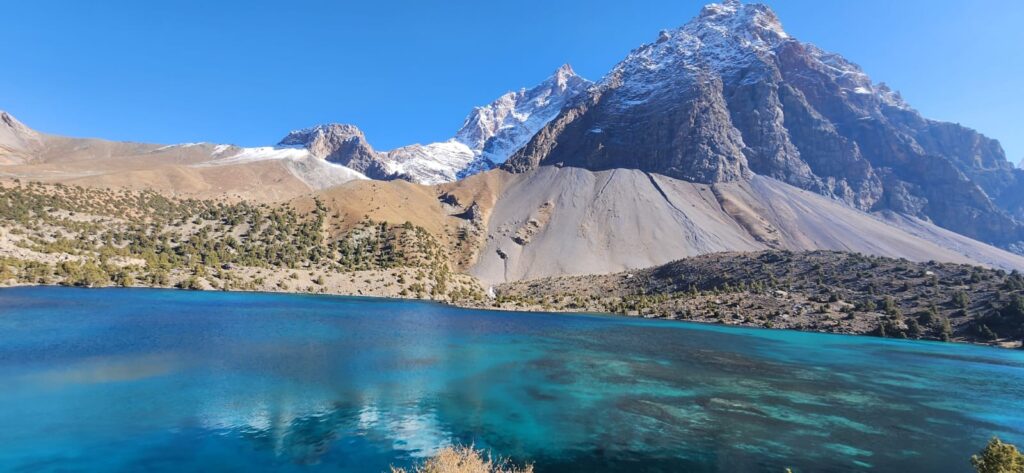
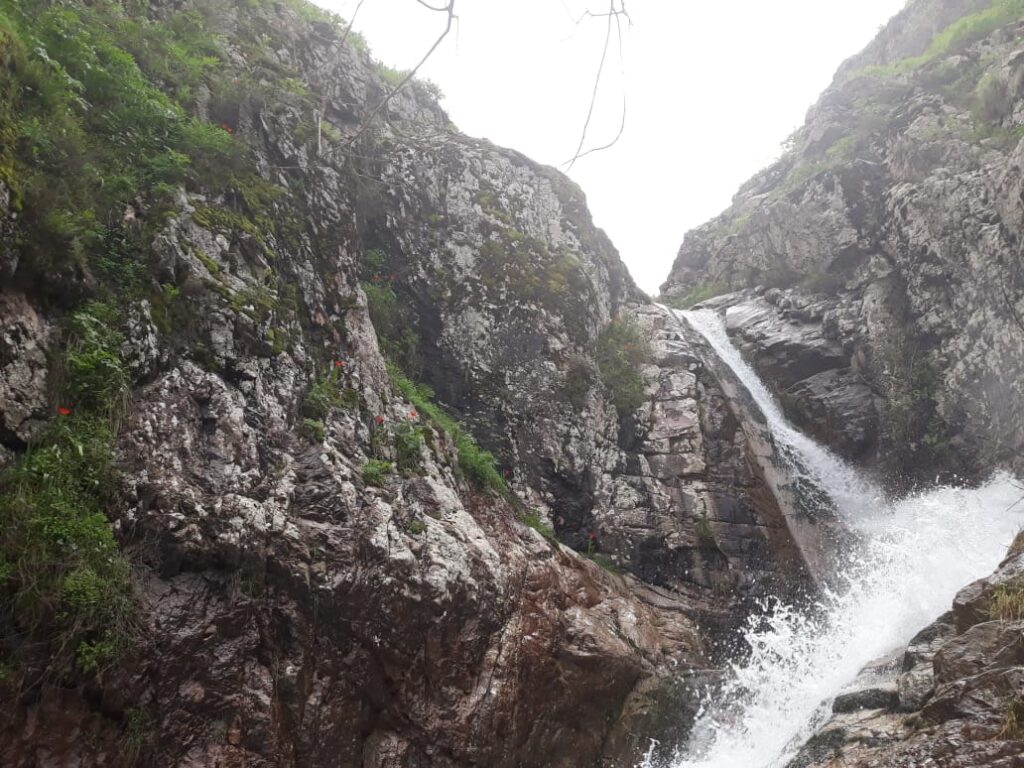
High above the treeline, where the air thins and the land turns to stone and grass, the geography of Tajikistan takes on a slower rhythm. This is the world of the jayloo—the summer pastures of the Pamirs—and of the yak herders who still follow ancient routes through valleys carved by ice and wind. To outsiders, it is a wilderness. To those who live here, it is a finely grained map of ridges, streams, and sheltering slopes. Every fold in the terrain has a name, a story, a microclimate. Geography is not background—it is the script of survival.
The Pamirs, stretching across eastern Tajikistan, form one of the highest inhabited regions on Earth. Yaks are the only livestock capable of enduring its extremes: nights that drop below freezing even in July, days when ultraviolet light burns the skin, and months when snow blocks all access. The animals’ thick coats and slow metabolism allow them to graze where sheep and cattle would perish. But even this adaptation is being tested. As climate patterns shift, the traditional balance between pasture, snow, and movement is changing in ways that herders can no longer predict.
Every summer route is a calendar in motion: when snow lingers too long, migration starts late; when melt comes early, the grass dries before the yaks arrive.
Herders in Murghab and Alichur describe a new uncertainty in timing. The alpine meadows, once lush by early June, now dry out by mid-July. The glaciers that feed their streams retreat uphill each year, reducing the meltwater that sustains pasture. In the highest basins, the grass species are shifting—from moisture-loving sedges to drought-tolerant forbs—changing the texture and nutrition of the landscape (Kreutzmann, 2013). For animals that need both energy and salt, these subtle shifts can mean the difference between endurance and exhaustion.
Scientific surveys by the Pamir Biological Institute confirm what herders observe. Between 1990 and 2020, average summer precipitation in eastern Gorno-Badakhshan fell by nearly 15 percent, while mean air temperature rose by 1.2°C (Kayumov, 2020). Shrub cover expanded at the expense of grasses, and seasonal snowlines moved upward by 100–150 meters. This vertical migration of climate zones translates directly into geography: pastures that once fed herds in midseason now burn out before the animals return from the valleys.
In response, herders have begun to adjust routes that once followed ancestral logic. Instead of two major migrations per year—spring ascent and autumn descent—many families now move three or four times, seeking green patches that last only briefly. This mobile geography is being redrawn by climate. “Our fathers walked in circles,” said a herder from Tokhtamysh. “We walk in zigzags.”
The yaks themselves, though hardy, suffer from heat stress at lower elevations. During unusually warm summers, they refuse to graze in open sunlight, crowding instead near glacier-fed creeks. Some herders now graze mixed herds—yaks and hybrid khainaks (yak-cattle crosses)—to hedge against uncertain conditions. These hybrids thrive better below 3,500 meters but are less suited to the high plateaus. “The old yak knows the wind,” one herder said. “The new one only knows the grass.”
Herding in the Pamirs is not an act of wandering but of reading the land—an ongoing conversation between movement, weather, and memory.
Pasture degradation compounds the stress. Overgrazing near settlements has left scars of bare earth that widen each year. The problem is not always herd size but timing: when snow delays migration, hundreds of animals are forced to graze too long in limited areas, crushing young shoots. The result is soil compaction and reduced infiltration—an erosion loop that geography amplifies. Because much of the Pamirs lie above 3,800 meters, where vegetation recovers slowly, even small disturbances last decades.
Researchers from the University of Central Asia have mapped pasture productivity across 20 villages, using satellite imagery to track biomass change from 2000 to 2020 (UCA, 2021). Their maps show a mosaic of resilience and decline: wetter north-facing slopes retain cover, while south-facing plains fade under stronger sun and grazing pressure. In some districts, community pasture committees now regulate access, rotating grazing zones seasonally—a revival of pre-Soviet customs that link geography with governance.
These shifts echo a broader theme: adaptation through knowledge rather than technology. In the absence of infrastructure—no fences, few permanent shelters—herders rely on observation. They watch wind patterns, the flowering of certain alpine plants, the call of the chukar partridge that signals snowmelt. Such cues form a living meteorology embedded in geography. When modernization arrived in the 1970s, this knowledge was briefly devalued; today, it is essential again.
In the Pamirs, the future is still decided by clouds. Every decision begins with a glance at the sky.
Economically, yak herding remains marginal. Wool and meat yield low profits compared to transport costs. Yet the herds persist, sustained by culture and necessity. Yaks provide milk, fuel (from dried dung), and mobility. They also embody what geographers call “residence in extremity”—the ability to inhabit landscapes others pass through. When asked why they continue, one herder replied, “Because the land does not move away. It waits for us.”
Recent pilot programs attempt to balance ecology and livelihood. The Pamir Eco-Pasture Initiative (2019–2023) supports rotational grazing and native grass reseeding on 5,000 hectares, while meteorological services deliver seasonal forecasts by radio. Early results suggest that combining indigenous timing with formal data reduces both overgrazing and livestock mortality (SDC, 2022).
Long-term, however, the sustainability of high-pasture herding depends on something more subtle: maintaining the link between geography and practice. When migration paths shorten, herders lose not only pasture but also the memory of how the land behaves. “The mountain teaches through walking,” said an elder from Bulunkul. “If you stay still, you forget its language.”
High pastures are not static ecosystems but dynamic classrooms where each generation relearns geography. To restore balance here is to restore movement itself.
The science of pasture monitoring—NDVI mapping, climate modeling, biomass sampling—meets the lived science of herding. Together they form a composite geography of adaptation: empirical, embodied, and precariously ongoing. In the Pamirs, where the horizon is always close to the sky, geography is both the problem and the solution.
References
- Kayumov, A. (2020). Climate Variability and Pastoral Livelihoods in Eastern Tajikistan. Dushanbe: Tajik Hydromet.
- Kreutzmann, H. (2013). Pastoral practices and their transformation in the Pamirs of Tajikistan. Mountain Research and Development, 33(3), 266–275.
- SDC. (2022). Pamir Eco-Pasture Initiative: Monitoring and Outcomes. Dushanbe: Swiss Agency for Development and Cooperation.
- UCA. (2021). Pasture Productivity and Climate Change in Gorno-Badakhshan: Remote Sensing Analysis 2000–2020. Khorog: University of Central Asia.