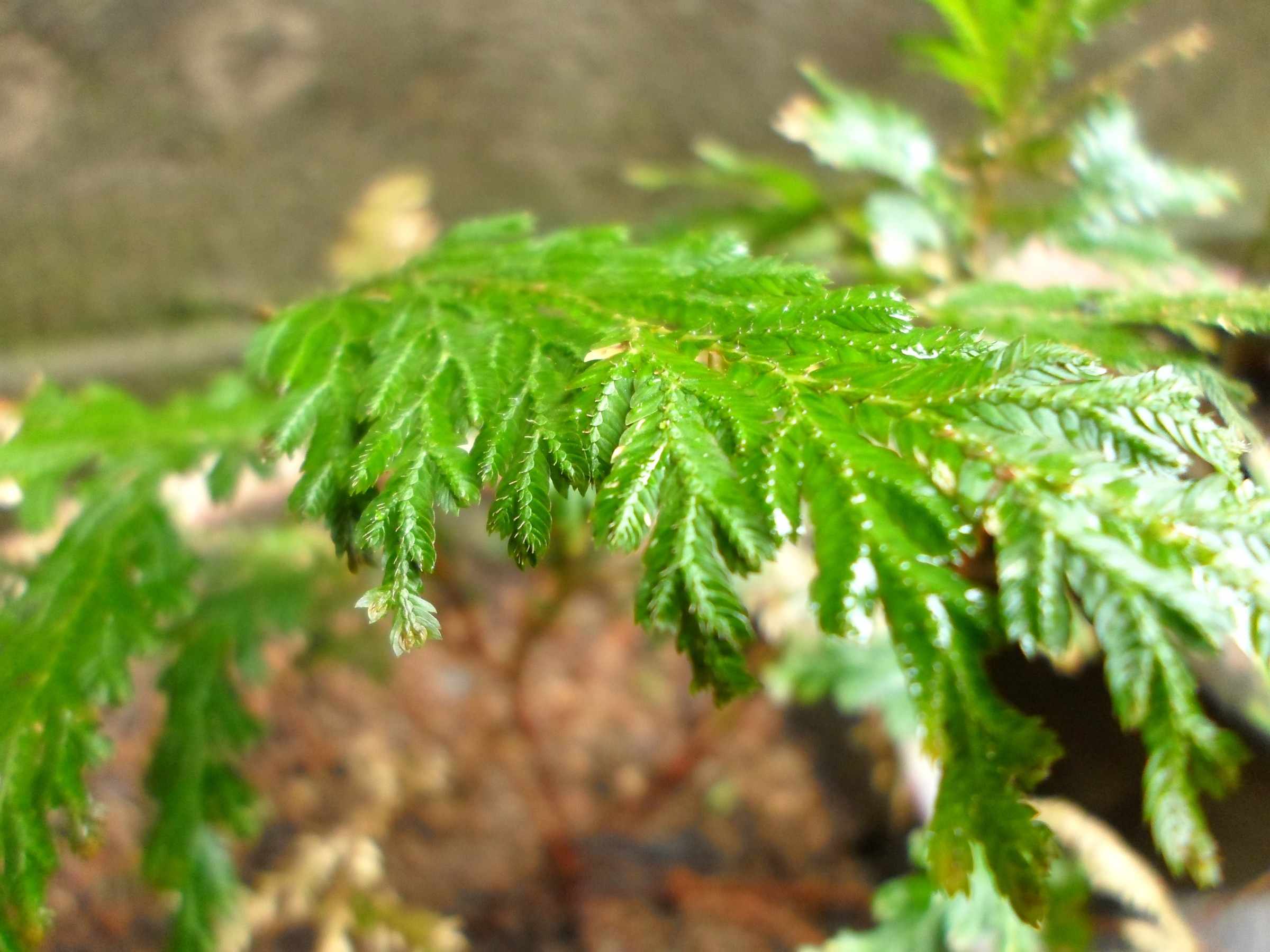
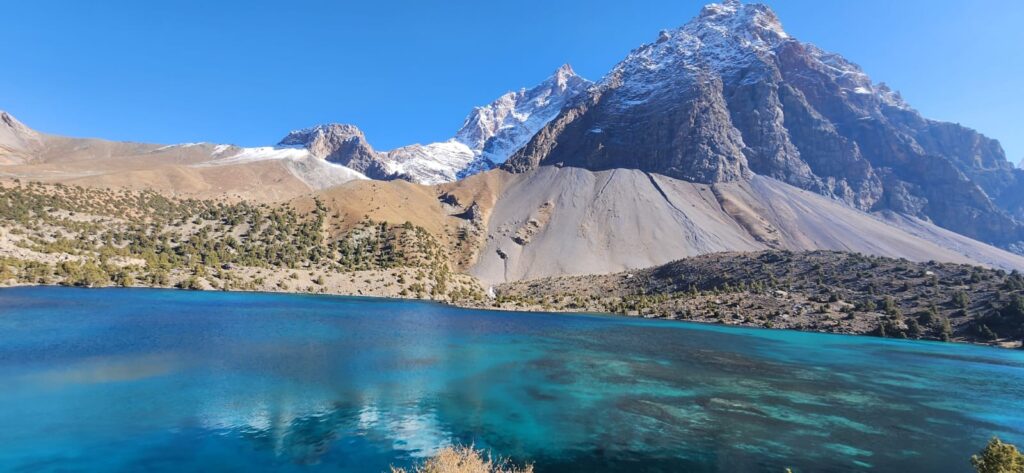
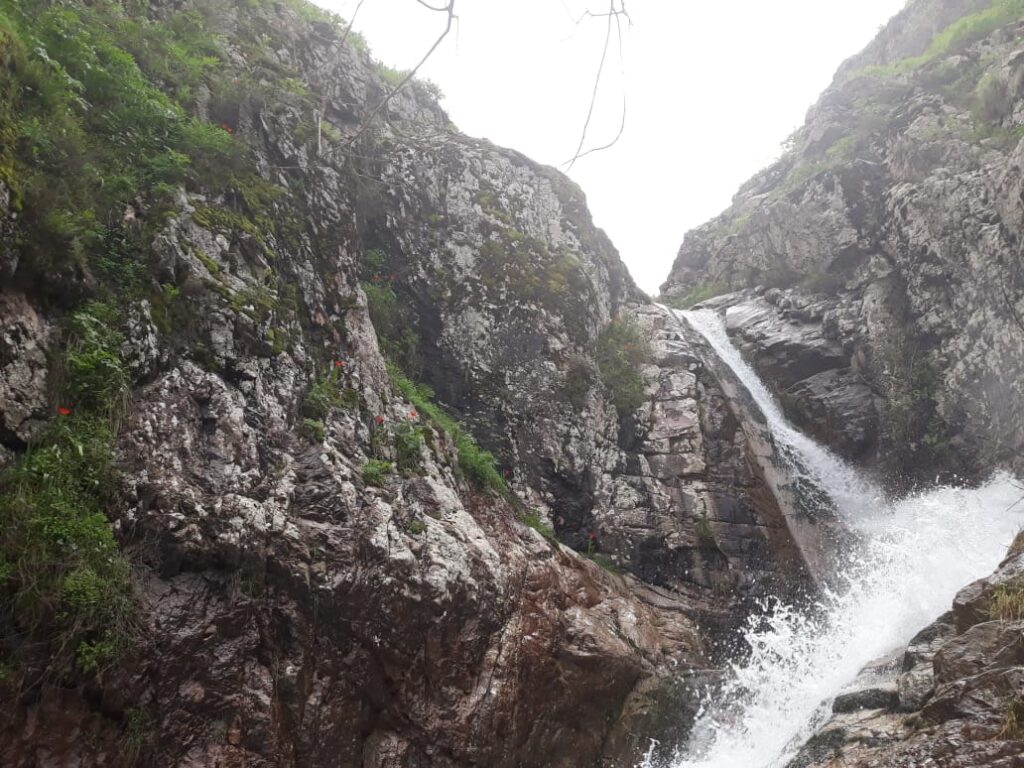
Across Tajikistan’s mountain slopes, where Soviet-era maps once painted dense green for juniper and walnut forests, the color has faded. What remains is a patchwork of scrub, stumps, and gullies. Yet in recent years, small rectangles of green have begun to return—sapling nurseries, fenced plots, and reforestation experiments that test how trees might reclaim the soil. Forest restoration in Tajikistan is not simply a matter of planting—it is a science of patience, rooted in geography, soil, and climate.
The story begins with loss. By the late 1990s, after decades of overharvesting and fuel collection during the civil war, Tajikistan’s forest cover had fallen to less than 3 percent of total land area (FAO, 2005). Most low-elevation juniper and walnut groves were stripped for firewood, and replanting efforts failed under poor irrigation and grazing pressure. In Gissar and Kulyab ranges, entire hillsides eroded into gullies. When the government and international partners renewed forest programs in the early 2010s, they faced a difficult geography: steep slopes, shallow soils, and communities reliant on the very land that needed rest.
Restoring a forest here means planting into memory: every slope remembers the goats, the plows, and the rains that carried its soil away.
The State Forest Agency began the first sapling trials near Danghara and Panjakent, selecting native juniper (Juniperus seravschanica), walnut (Juglans regia), and pistachio (Pistacia vera) species. Each test plot functioned as an experiment in microclimate. Some used contour planting—rows along natural terraces—to slow runoff. Others mixed shrubs and trees to stabilize soil faster. Researchers from the Academy of Sciences tracked soil moisture and seedling survival, comparing altitudes from 800 to 2,000 meters. Results were uneven: walnut survived only where soil depth exceeded 30 centimeters; juniper endured drought but grew slowly. Pistachio, though promising, suffered from frost pockets in narrow valleys (Rajabov et al., 2019).
Still, each failure taught something. “We realized we were planting like in a flat land,” said one forestry engineer in Khatlon. “But the mountain has its own rules.” Those rules became clearer over time: plant after the first spring melt, not before; mix native grasses to shade young roots; use stone bunds to trap rainwater. The science of restoration evolved from a textbook exercise into a lived understanding of mountain hydrology.
By 2018, reforestation projects supported by UNDP and the Global Environment Facility had expanded across 4,000 hectares, including community-managed woodlots. Instead of top-down planting, villagers were trained to maintain nurseries and harvest seedlings sustainably. Some experiments introduced drought-tolerant almond and hawthorn species to diversify income. “If a tree gives fruit, people protect it,” explained a local forester. This principle—economic ecology—proved more effective than fences alone.
Satellite imagery confirms small but steady gains. Normalized vegetation indices (NDVI) across pilot zones in Panjakent and Varzob show 10–15 percent greener cover between 2015 and 2021 (UNDP, 2021). These gains are modest compared to total loss, but they mark a turning point: for the first time in decades, forest cover is growing rather than shrinking.
Every sapling is a negotiation with geography. The slope decides how much water stays; the soil decides how much hope survives.
The challenges remain formidable. Summer droughts are lengthening, reducing the survival rate of seedlings planted after May. Grazing bans are hard to enforce; herders often cut through young plots to reach pastures. In response, foresters are experimenting with “living fences” of thorny shrubs and natural barriers—methods borrowed from Central Asian agroforestry traditions. Trials in Shahrinav district use wild rose and sea buckthorn to form hedges that deter livestock and anchor soil simultaneously. Initial data show erosion rates falling by nearly half in protected zones (Kayumov & Rahmonov, 2020).
Soil restoration is part of the same equation. In deforested zones, topsoil often eroded down to subsoil clay, leaving little organic matter. Researchers are testing micro-catchments—small, semicircular pits that collect rain and sediment. These structures mimic the land’s natural pattern, allowing organic recovery around each sapling. “You cannot just plant trees,” said botanist M. Kurbonov. “You must rebuild the conditions for trees to want to live.”
In the mountains of Tajikistan, the line between forest and field is thin. It moves with water, with people, with time.
Beyond ecology, restoration is cultural renewal. In Yaghnob and Ayni districts, villagers have revived traditional ceremonies tied to tree planting—blessing the first walnut, offering bread to the soil. Such acts reconnect environmental work with memory, turning reforestation into a form of continuity. This matters in a country where migration often empties villages of youth; tree planting becomes a promise that someone will return to see them grow.
New technologies support these efforts. Drones now map slope exposure to optimize planting orientation. Low-cost soil sensors record moisture to guide watering schedules. In 2021, Tajikistan joined the “Central Asian Green Belt” initiative, committing to restore 30,000 hectares of degraded land by 2030 (UNECE, 2021). Yet experts caution that scale alone does not ensure success. The most enduring forests are those where communities tend the trees long after the project ends.
The geography of restoration is slow geography: it measures success not in hectares but in roots that hold after the second drought.
Forest restoration in Tajikistan thus bridges science and patience. Each sapling represents both experiment and faith, each slope a test of endurance. The country’s geography—mountainous, eroded, generous when handled gently—demands that planting be an act of listening as much as of labor. In the long arc of land recovery, these early sapling experiments may mark the beginning of a new environmental memory: one where loss gives way to learning, and forests, once felled, begin to return on their own terms.
References
- FAO. (2005). Forest Resources of Central Asia. Rome: Food and Agriculture Organization of the United Nations.
- Kayumov, A., & Rahmonov, R. (2020). Community-based forest rehabilitation under semi-arid mountain conditions. Journal of Central Asian Ecology, 3(2), 57–69.
- Rajabov, I., Kurbonov, M., & Kayumov, A. (2019). Comparative survival of native tree species in reforestation trials of western Tajikistan. Mountain Research and Development, 39(3), 241–252.
- UNDP. (2021). Forest Landscape Restoration in Tajikistan: Results and Lessons Learned. Dushanbe: United Nations Development Programme.
- UNECE. (2021). Central Asian Green Belt Initiative: Regional Commitments and Progress. Geneva: United Nations Economic Commission for Europe.