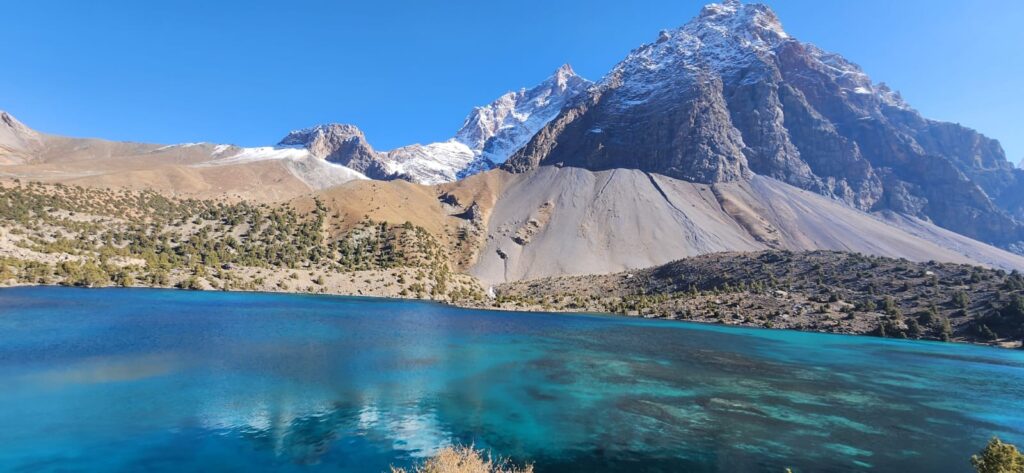
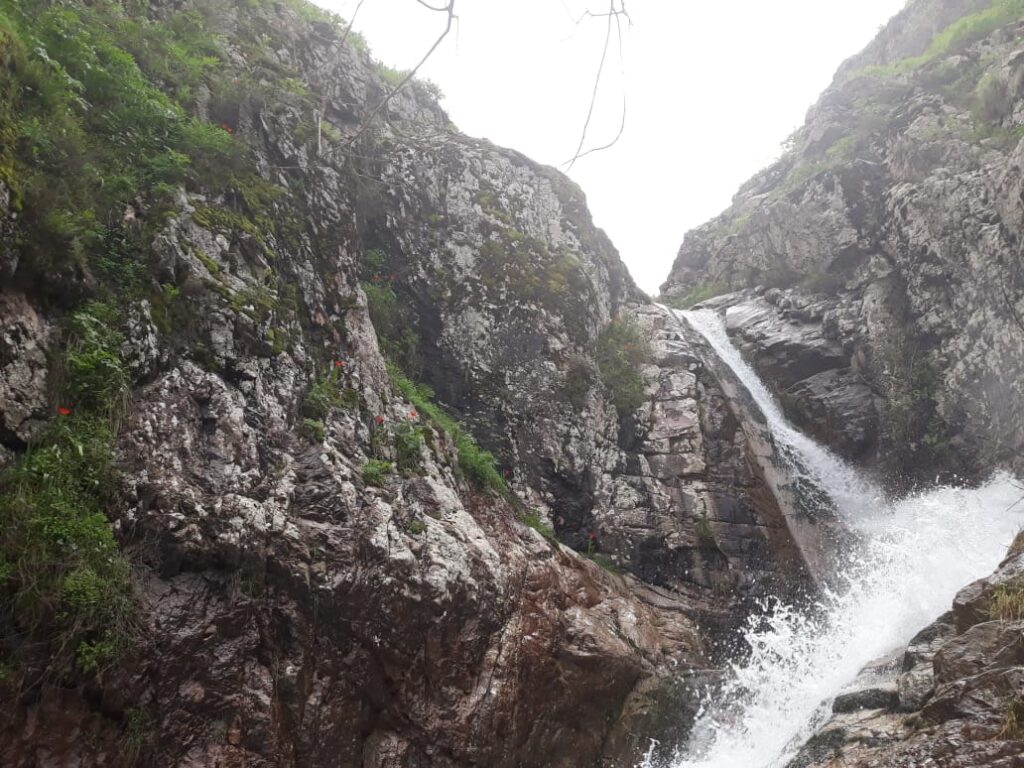
On the slopes above the Varzob Valley, the air smells of thyme and wet soil. Spring rains coax green shoots from the ground, and the hillsides shift from brown to vivid color almost overnight. Wild tulips flare red and gold; almond trees burst into blossom. Tajikistan’s flora is astonishing in its variety: more than 5,000 species recorded across mountain, steppe, and desert. To walk through these landscapes is to move through a living archive of Central Asia’s ecological history.
The Pamirs, sometimes called the “Roof of the World,” are not only a geological marvel but also a botanical refuge. Glacial valleys shelter endemic species found nowhere else. In the Zeravshan and Hissar ranges, scientists document rare plants adapted to thin soils and extreme cold. According to the Academy of Sciences, nearly 30 percent of Tajikistan’s flora is endemic or sub-endemic (Nowak et al., 2011). These are species that have survived ice ages and millennia of change, clinging to cliffs and alpine meadows.
A botanist in Dushanbe describes it simply: “Every valley is a laboratory. If you walk two ridges over, you find new plants.” This diversity has made Tajikistan a hotspot for international research, even if resources for local conservation remain scarce.
The richness of flora is also fragile. Overgrazing, deforestation, and firewood collection place immense pressure on ecosystems. In rural areas, where electricity and gas are unreliable, families turn to shrubs and trees for fuel. The World Bank notes that wood harvesting in some districts exceeds sustainable levels by several times (World Bank, 2013). Pastures near villages often appear stripped bare, with only the hardiest weeds surviving.
Yet even degraded landscapes carry resilience. After heavy rains, plants sprout from cracks in rocks; medicinal herbs reappear in fallow fields. The tension between use and renewal defines Tajikistan’s biodiversity story: plants are not only scenery but survival, woven into livelihoods as food, medicine, and fuel.
Biodiversity here is lived, not abstract. Farmers gather wild onions for flavor, shepherds collect herbs to treat sheep, and children pick flowers on the way to school. The flora is part of daily rhythms, a resource and a companion. Conservation is not only about protecting rare species in reserves- it is about sustaining the ordinary plants that carry families through winter and mark the seasons of life.
Protected areas offer some hope. Tajikistan hosts more than 20 reserves and national parks, including the massive Tajik National Park in the Pamirs, a UNESCO World Heritage site. These areas preserve alpine meadows and high-mountain plants, but pressures persist even within boundaries. Poaching, grazing, and climate shifts cross invisible lines.
NGOs and research institutes try to bridge science and community. In Gorno-Badakhshan, pilot projects encourage villagers to cultivate medicinal herbs rather than harvesting wild stocks. School programs teach children to recognize local plants and understand their ecological role. These steps are small but vital, ensuring that knowledge of flora is passed on with care.
Warming trends bring new uncertainties. Glacial retreat alters water regimes; drought stresses lowland pastures. Scientists worry about the upward shift of vegetation zones, with alpine species squeezed higher until there is nowhere left to go. A UNEP report warns that “mountain ecosystems in Central Asia are highly vulnerable to climate variability, with flora particularly at risk” (UNEP, 2012). The future of biodiversity depends not only on protection but on adaptation as well as how communities and species adjust together.
In villages across Tajikistan, flora is a language of memory. Grandmothers brew teas from dried herbs, mothers rub chamomile on children’s foreheads to ease fever, and markets brim with bundles of wild garlic in spring. These practices tie ecology to culture, reminding us that biodiversity is not a distant concept but a shared inheritance.
Walking through the hills above Dushanbe in April, one feels this inheritance in the air itself: the scent of thyme, the blaze of tulips, the buzz of bees. It is fragile, yes, but also enduring, rooted in soil and story alike.
References
- Nowak, A., Nobis, M., & Nowak, S. (2011). Distribution patterns of vascular plant species in Tajikistan: floristic links between Pamir-Alai and adjacent mountain ranges. Journal of Arid Environments, 75(6), 537–546.
- UNEP. (2012). Global Environment Outlook: Central Asia Chapter. Nairobi: United Nations Environment Programme.
- World Bank. (2013). Tajikistan: Environment and Natural Resources Review. Washington, DC: World Bank.