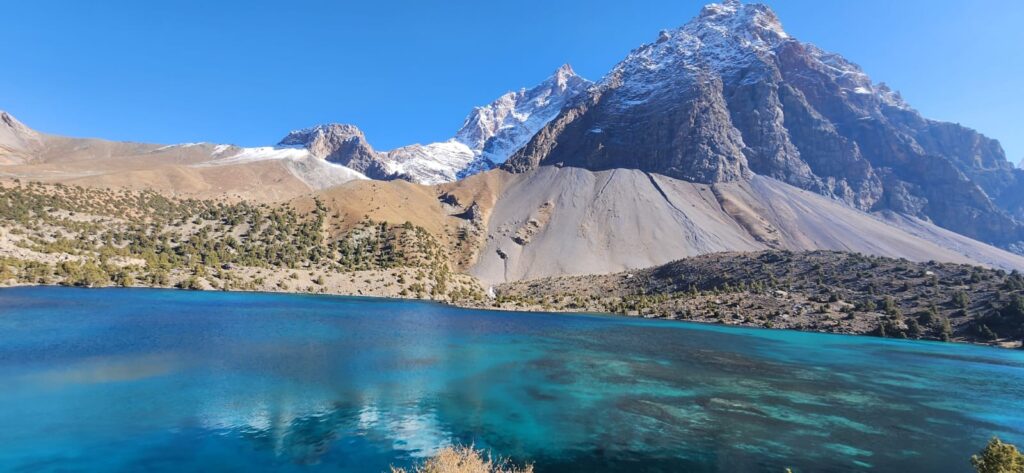
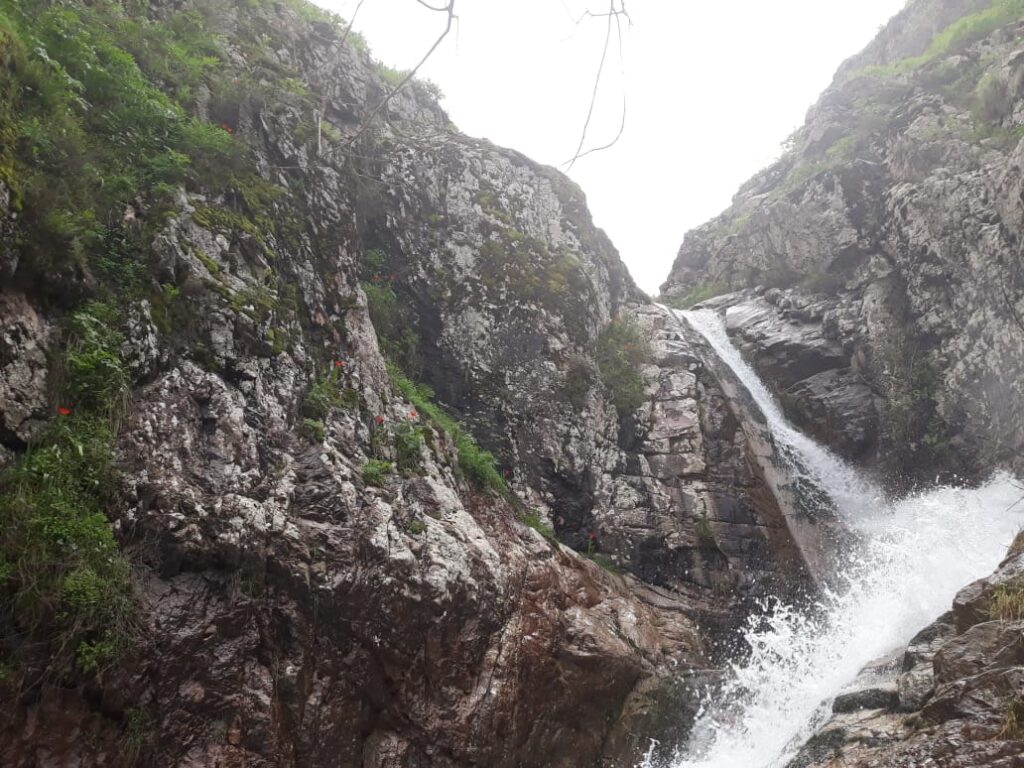
Rain begins in the high ridges before sunrise, falling first in whispers, then in cascades of sound. Drops pound the roofs of villages in Rasht and Gorno-Badakhshan. Slopes groan. Where soil is loose, roots thin, and water has soaked deep, there is momentum- not in the way of rivers but in earth itself shifting. In some spots the land gives, and houses tremble, roads sag, terraces buckle. This is landslide country: a geography of movement under every footstep.
In the upper valleys, gullies deepen overnight. Stones begin to shift. A farmer waking before dawn finds his irrigation canal cut aside by an earth slump. In another village, elders discover a small scar on a slope that was stable only yesterday. “The mountain moves on its own clock,” says one man, brushing dust off his boots. He means this physically: the mountain shifts.
Landslides here are varied: shallow slides on loamy soils, debris flows when storms overwhelm small gullies, blockages of streams when slopes collapse, even rockfall when fractures open. During heavy rain, saturated soil becomes fluid; small slides cascade into larger ones. In Rasht, where the relief is steep, these can be dramatic. A road built in a valley bottom sometimes ends up buried under its slope’s collapse.
Villagers speak of nights when the earth whispered with rocks sliding, ground settling. A woman in a Murghob village says, “We heard a slide in sleep and woke to find part of our field gone, half the terrace down.” Her memory is geography in motion. The valley remembers.
Landslides are not remote disasters. They happen in people’s lives, not only in geology texts. They eat away at the edges of farms, destroy paths, shift water courses, and remind communities that the land beneath their feet is never fixed. In Rasht and GBAO, every heavy rain is a question: will the slope hold, or will the earth reconfigure itself?
Engineers try mitigation: check dams, retaining walls, toe trenches, drainage channels. But resources are limited and slope lengths long. A UNDP hazard survey shows that many protective walls built in the Soviet era have deteriorated or lack maintenance (UNDP, 2014). When a slide hits, mitigation often comes only afterwards, in repair and rebuilding, seldom in anticipation.
Steep terrain compounds human vulnerability. Villages cling to valley bottoms. Roads hug slopes. Houses are built into hillsides. Yet the geography dictates risk. A house built at the bend of a gully might escape, but its neighbor perched above takes the brunt of collapse. Thus risk is uneven, often determined by subtle site choices.
Wildlife also moves. Mountain goats leap across crests; marmots dart in and out of burrows. When landslides disturb vegetation, animals scatter. Birds flee gullies. Landslides reshape habitat corridors, fragment slopes, and reshuffle surface cover. Ecologists note that landslide scars often pioneer new successional vegetation such as willows, alders, grasses which recolonize within years. Over time, the scars become part of the landscape mosaic.
Changing climate intensifies the risks. Storms grow heavier; snowmelt happens faster. Days with intense precipitation are projected to rise in Central Asia (IPCC AR5). In a region where slopes are already near failure, more intense rainfall pushes more slides. In GBAO, permafrost thawing may further destabilize slopes.
Remote sensing helps map change. Satellite images detect scar lines, slope curvature, soil moisture, and vegetation retreat. Researchers use digital elevation models to identify slope aspects susceptible to slides- north vs south, convex vs concave. In Tajikistan, several geomorphology teams produce hazard maps for Rasht districts, mapping zones of high risk (Hazards Institute reports).
Community memory also matters. Locals recall past slides. They know where the ground “feels hollow.” They watch cracks in walls, tilting trees, water emerging in odd spots. These oral maps often match scientific hazard zones, though they lack legal weight. In a village meeting, elders point on a slope: “Here was a slide thirty years ago.” They mark it not with maps but with stories.
To walk along a mountain path after a storm is to see landslide news: stripped trees, fresh scars in soil, undermined roots, walls collapsed into gullies. The mountain writes its history anew every season, in slopes and scars.
Landslides challenge perception: they make geography visible as violence. They remind us that land is not static. For villages in Rasht and GBAO, every rainfall has a question mark, every slope a potential. To live there is to live with soil in motion and to measure one’s life in cracks, scars, and repair.
References
- UNDP. (2014). Hazard Mapping and Risk Reduction in Tajikistan Highlands. Dushanbe: UNDP Tajikistan.
- IPCC. (2013). Climate Change 2013: The Physical Science Basis. Cambridge: Cambridge University Press.
- Hazards Institute, Tajik Geoscience Research Reports (archived slope failure maps).