In the high valleys of Tajikistan, glaciers are not static masses of ice—they are reservoirs under tension. They move, melt, shift, and sometimes fail. When they do, the result can be one of the most sudden and destructive phenomena in mountain geography: a glacial lake outburst flood, or GLOF. These floods, unleashed from moraine-dammed or ice-dammed lakes, sweep down valleys with little warning, carrying boulders, ice blocks, and debris through villages and croplands that often have no memory of what caused the surge. Tajikistan’s topography—a maze of steep valleys, rapid glacial retreat, and high seismicity—makes it one of the world’s hotspots for such events.
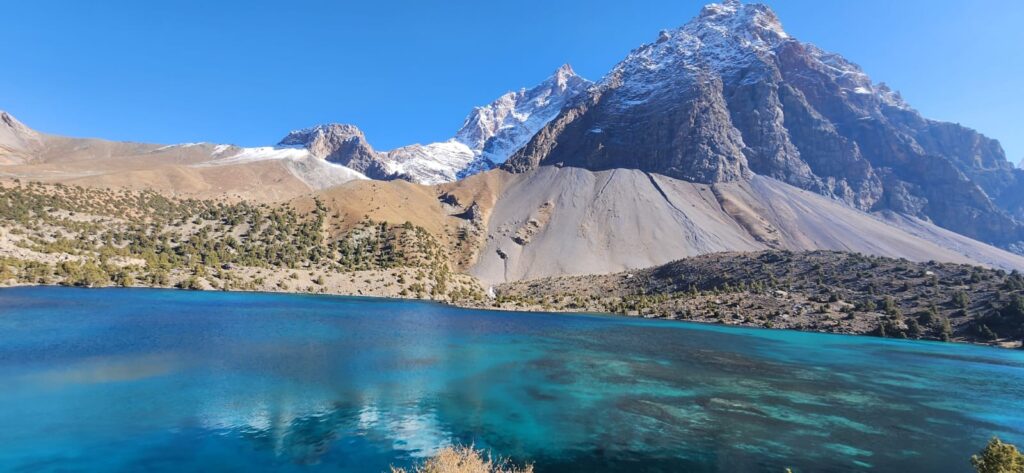
A glacial lake is a simple idea: meltwater collects in hollows left by retreating ice, trapped by moraine ridges or remnant ice walls. But that simplicity masks instability. Moraine dams, built of loose sediment, are inherently weak, and ice-cored ones are even more fragile. When warming accelerates meltwater inflow, or when landslides, ice calving, or seismic tremors jolt the system, the dam can fail catastrophically. The flood wave travels fast—dozens of kilometers in hours—and can devastate settlements far downstream.
In Tajikistan’s high valleys, a single hour of meltwater can undo years of human settlement. The geography that sustains glacial lakes also conspires against their safety.
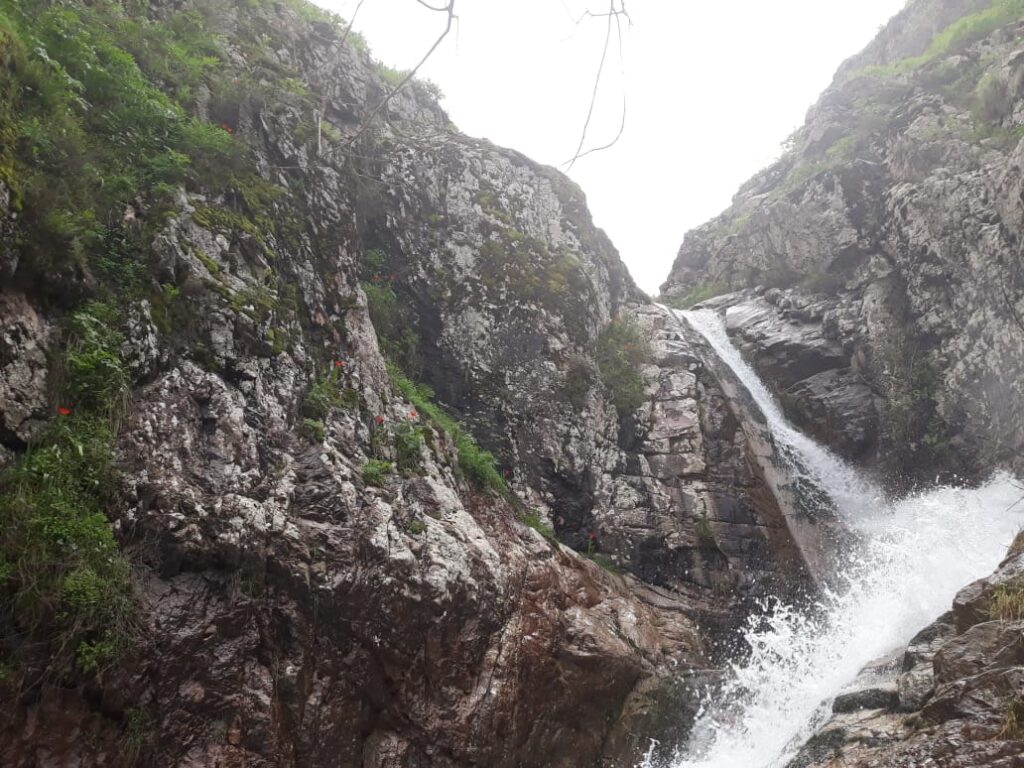
The country’s hydrological and seismic settings intersect tragically. The Pamirs and Gissar-Alay ranges are riddled with young moraines and perched lakes—more than 1,300 have been catalogued, and over 30 identified as potentially dangerous (Kayumov, 2010; Bolch et al., 2011). Most of these lie above 3,500 meters, in basins with active glacier tongues. Because of the steep relief, outburst floods follow narrow channels that amplify their destructive power, scouring alluvium and carving terraces before spilling onto valley floors where villages and irrigation systems cluster.
Historical records illustrate both the frequency and the geographic logic of these disasters. In July 1963, the failure of the Medvezhiy glacier tongue in neighboring Kyrgyzstan sent a flood down the Vakhsh River valley that affected Tajikistan’s hydropower infrastructure more than 200 kilometers downstream (Erokhin et al., 1970). Closer to home, the 2002 GLOF from the Shurob glacial lake in the Gunt basin destroyed bridges and road sections linking Khorog to the upper Pamirs. In 2015, a smaller event in the Yazgulom valley damaged several hydrological monitoring stations and wiped out terraced fields along tributary slopes (Shahgedanova et al., 2018).
Each event reveals a topographic chain reaction: ice retreats, a lake forms, the dam weakens, and the downstream human geography expands just enough to meet the next flood.
Researchers have mapped these sites extensively using satellite imagery. From the mid-2000s onward, high-resolution remote sensing—ASTER, Landsat, and later Sentinel—has documented the expansion of glacial lakes in the Pamirs by nearly 20 percent (Bolch et al., 2011; Stoffel et al., 2014). The most dynamic zones lie in the Fedchenko Glacier basin, the Rushan and Yazgulom valleys, and near the headwaters of the Bartang River. Field verification is hard: many lakes are accessible only after multi-day treks at high altitude, and the ice margins change yearly. Yet the pattern is clear—lakes are forming higher, faster, and more frequently as glaciers retreat.
Tajik hydrologists classify potentially dangerous lakes based on three indicators: volume, dam composition, and proximity to settlements or infrastructure. A “red” classification implies imminent hazard—either due to visible seepage through moraine, recent seismic activity, or rapid lake growth. The Sarez Lake, though enormous, is technically stable for now, its Usoi Dam—the tallest natural dam in the world—closely monitored. But smaller lakes in the Khumbob, Varshedz, and Vanj catchments present subtler risks. Their dams are thinner, less consolidated, and in some cases riddled with ice cores that melt unevenly.
Downstream, the memory of past floods lingers in place names. The Bartang valley’s wide terraces were shaped by prehistoric GLOFs that carried boulders the size of houses. Local oral histories often begin with a phrase like “before the flood,” linking time to hydrological catastrophe. One elder from Basid recalled, “The river spoke in the night. In the morning, it had taken the road.” His words describe both awe and acceptance: in these valleys, people live on the edge of moving geography.
Geographers studying GLOFs in Tajikistan often note that the hazard is not merely natural—it is relational. It emerges from the meeting of retreating ice, rising temperature, steep land, and human proximity.
Monitoring efforts have grown since the 2000s. Hydrometeorological services, in partnership with international research programs, maintain stations along key tributaries. Some glacial lakes are instrumented with simple pressure gauges that detect sudden water level drops. Others are monitored through repeat satellite imagery every summer. In 2019, a pilot project in the Gorno-Badakhshan region began testing early-warning sirens linked to hydrological data from automatic sensors (UNDP, 2019). While these systems are rudimentary, they mark an important step toward proactive risk management.
Prevention, however, remains mostly geographic. Diversion channels and siphons have been used experimentally to lower lake levels, though the terrain complicates access. Small-scale drainage of the Khumdon lake in 2013 reduced volume by 15 percent before winter freeze. In the Shakhdara valley, engineers constructed a narrow channel to maintain controlled overflow, stabilizing pressure on the moraine. Each intervention depends on intimate topographic knowledge—where to cut, how much to drain, and how to avoid triggering the very failure it seeks to prevent.
Geoscientists emphasize that GLOF mitigation in Tajikistan must integrate with land-use planning, not stand apart from it. Settlements, hydropower plants, and road networks should all account for upstream lake dynamics. The current road to Murghab, for instance, runs along ancient flood terraces—safe for now, but reminders of how far older floods once reached. As climate change accelerates glacier retreat, these case studies are not isolated anomalies but previews of a mountain future where water and hazard converge.
References
- Bolch, T., Peters, J., Yegorov, A., Pradhan, B., Buchroithner, M., & Blöthe, J. (2011). Identification of potentially dangerous glacial lakes in the northern Tien Shan and Pamir Mountains using remote sensing. Natural Hazards, 59(3), 1691–1714.
- Erokhin, N. G., Kucherov, A. L., & Rubanov, L. V. (1970). Catastrophic glacier surge and flooding in the Vakhsh River basin, Central Asia. Soviet Geography, 11(4), 228–236.
- Kayumov, A. (2010). Climate change impact on water resources in Tajikistan. Dushanbe: Tajik Hydromet.
- Shahgedanova, M., Nosenko, G., Kutuzov, S., & Rajabov, I. (2018). Glacier change and glacial lake development in the Pamir-Alay region, Central Asia. Geosciences, 8(12), 465.
- Stoffel, M., Huggel, C., & Korup, O. (2014). Integrated assessment of GLOF hazards. Science of the Total Environment, 493, 1129–1141.
- UNDP. (2019). Strengthening disaster risk governance and early warning systems in Tajikistan. Dushanbe: United Nations Development Programme.