
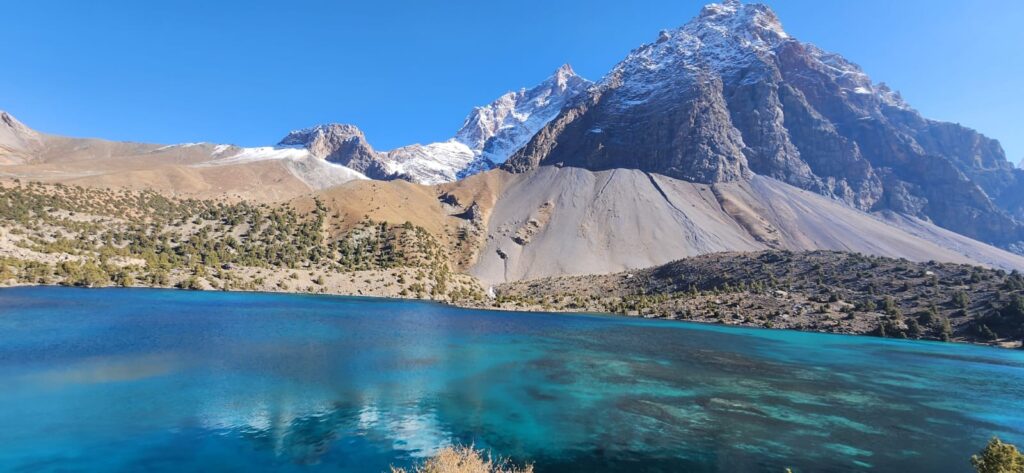
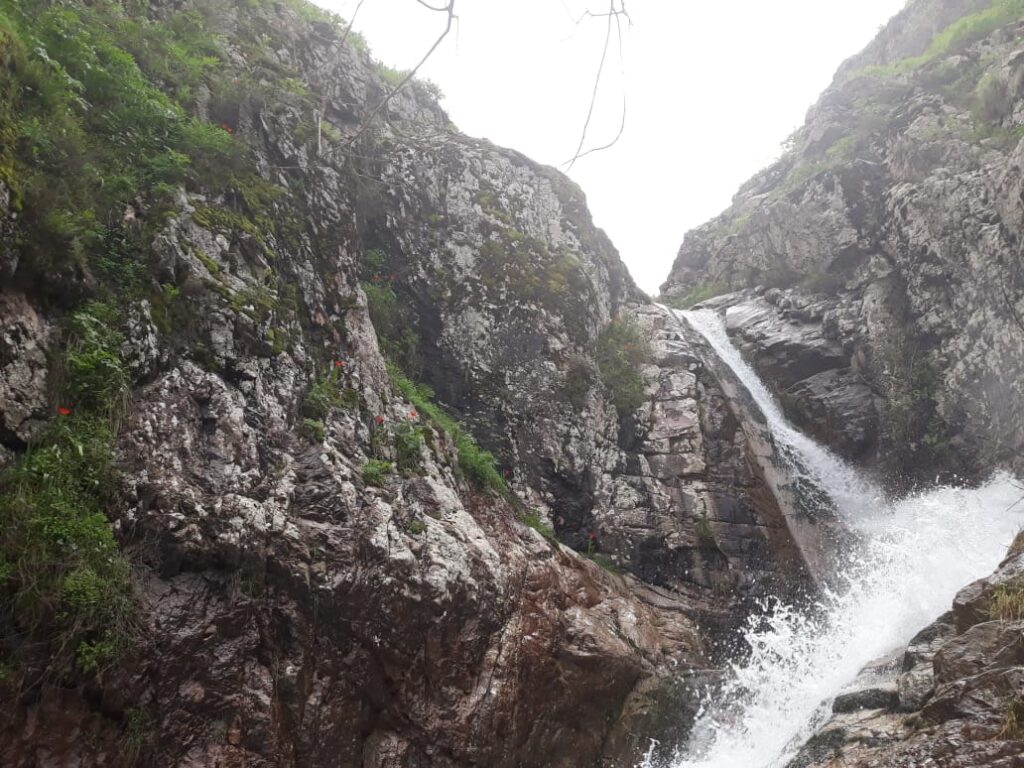
In Tajikistan’s broad valleys, where mountain winds carve through the Gissar and Khatlon plains, air is no longer just weather—it’s becoming a resource. Long known for its rivers and hydropower, the country is beginning to rediscover a quieter force: the geography of wind. Turbines are still rare here, silhouettes against a skyline dominated by mountains rather than machines. But as the energy landscape shifts globally and locally, the geography of Tajikistan is emerging as an untapped archive of motion, waiting to be mapped.
If water built Tajikistan’s first modern power grid, wind might yet help sustain its future one.
The physics of Tajik wind begins with relief. The country’s steep topography funnels air through narrow passes, intensifying regional currents. The Rasht Valley and Gissar corridor act like bellows—channeling mountain–valley breezes that reach speeds of 7–10 meters per second during late afternoon peaks (Hydromet, 2019). Seasonal contrasts further amplify this: strong westerlies dominate spring, while katabatic winds flow downslope at night in winter. Together, these systems create microclimates where air movement becomes predictable—a precondition for harnessing energy.
Historical weather records show that some of these patterns have been stable for decades. Soviet-era meteorological stations, particularly those near Yovon and Danghara, recorded persistent diurnal wind cycles suitable for power generation (Mukhamadiev, 1974). Yet in the 20th century, such data were mostly used for aviation and agricultural planning. Hydropower monopolized the national energy imagination. Wind belonged to folklore, to shepherds and dust storms, not to engineering.
That began to change only in the past decade, as the limits of river dependence became clearer. Winter blackouts, caused by low water levels and aging turbines, prompted a search for complementary renewables. Initial studies by the Tajik Academy of Sciences in 2015 identified at least 6,000 MW of theoretical wind potential nationwide (Kayumov et al., 2018). The windiest zones—Khatlon plains, Gissar Valley, and certain high-altitude plateaus near Murghab—combine steady flow, low turbulence, and access to transmission corridors.
The map of wind in Tajikistan is also a map of exposure: where the land opens, the air gathers strength.
Unlike hydropower, wind’s geography is not fixed to rivers but to relief. The best sites often lie along saddles and ridgelines, where pressure gradients accelerate flow. In the foothills south of Dushanbe, small turbines already dot research facilities, part of the National Renewable Energy Centre’s pilot program (Rahmonov & Ismoilov, 2021). Each installation is a quiet experiment in scale: can a few kilowatts at a farm or school ease dependence on diesel?
Communities that once measured geography in terms of water access are beginning to think in terms of air. “Wind has no owner,” says engineer Firuz Sharipov, who helped install the country’s first hybrid solar–wind system in 2019 near Bokhtar. “You only need to know how it moves.” His words echo an older understanding: in traditional farming, farmers in southern Tajikistan once timed planting with the onset of the bad-i-garm, the warm wind that signaled the end of frost. Geography, in both cases, is about reading the invisible.
Climate modeling adds new urgency. Projections show that by 2050, rising temperatures will alter regional pressure systems, increasing wind frequency in spring and autumn (World Bank, 2021). This may expand viable zones for turbines while also intensifying dust transport. As engineers look for consistency, geographers warn of trade-offs: “The same corridors that carry energy also carry erosion,” notes Rahmonov (2022). In Khatlon, persistent winds strip topsoil from exposed fields, a reminder that not all energy flows are benign.
The landscape of wind energy is also a social one. Siting turbines requires balancing efficiency with equity—placing them close enough to the grid yet far from settlements, in zones of low ecological conflict. The high plateaus of the eastern Pamirs, though rich in steady winds, are also pastures for yak herders and migration routes for wildlife. Mapping these overlaps has become a core task of “wind geography,” an emerging field that combines meteorology, land use, and spatial planning. Using GIS layers of wind velocity, vegetation cover, and infrastructure, researchers from the Tajik Technical University produced the first Wind Atlas in 2022 (TTU, 2022). It highlights zones of “medium potential with low conflict,” mostly near Yovon, Danghara, and parts of Shahritus.
Every turbine map is also a moral map—where we choose to place our technology tells what kind of geography we value.
Economic potential remains enormous. A 2020 feasibility study estimated that even harnessing one percent of identified wind zones could generate 2 billion kWh annually—enough to offset winter deficits when rivers freeze (ADB, 2020). Unlike large dams, wind installations are modular and reversible, allowing adaptation to local conditions. For mountain villages cut off from the main grid, small turbines can power lights, pumps, or communication towers without costly transmission lines.
At Murghab’s high plateau, where winter nights reach –30°C, a new hybrid microgrid was installed in 2022 combining wind and solar power. Residents report more stable electricity than from the old diesel generator. “We used to fear the long nights,” says local teacher Dilorom Khojamurodova. “Now the wind keeps us lit.” For scientists, this represents more than convenience—it’s proof that geography can again become a solution rather than a limitation.
Still, challenges remain. Seasonal wind variation requires storage or hybrid systems; imported turbines must be adapted to high-altitude cold; and maintenance capacity is limited. Local manufacturing is minimal, though technical training programs at the Dushanbe Energy Institute now include wind mechanics in their curriculum.
To harness wind is to learn patience—it cannot be stored, only invited.
For a country built on hydropower, the transition toward diversified renewables marks a profound shift in thinking about geography. Where once water falling from mountains symbolized energy, now it is air moving across them. The two are complements: one shaped by gravity, the other by pressure. Both remind us that Tajikistan’s energy future lies not in conquering nature but in aligning with its rhythms.
The winds that sweep across the plains of Khatlon today may feel ancient, but their meaning is new. They tie the high Pamirs to the low valleys, connecting climates, technologies, and futures. And in that connection lies a promise—that energy, like geography, can be both local and limitless.
References
- ADB. (2020). Wind Energy Development Potential in Tajikistan: Feasibility Report. Manila: Asian Development Bank.
- Hydromet. (2019). Climatological Data on Wind Regimes in Tajikistan. Dushanbe: Agency for Hydrometeorology.
- Kayumov, A., Rajabov, I., & Ismoilov, G. (2018). Assessment of renewable energy resources in Tajikistan. Renewable Energy Studies of Central Asia, 6(2), 55–74.
- Mukhamadiev, B. (1974). Wind and Climate Patterns of the Tajik SSR. Dushanbe: Nauka Press.
- Rahmonov, R., & Ismoilov, G. (2021). Micro-wind systems for rural electrification in southern Tajikistan. Energy Geography Journal, 9(3), 141–159.
- Rahmonov, R. (2022). Wind erosion corridors and renewable siting conflicts in southern Tajikistan. Environmental Geography Reports, 11(1), 23–47.
- TTU. (2022). National Wind Atlas of Tajikistan. Dushanbe: Tajik Technical University.
- World Bank. (2021). Tajikistan Climate Change and Energy Transition Overview. Washington, D.C.: World Bank Group.