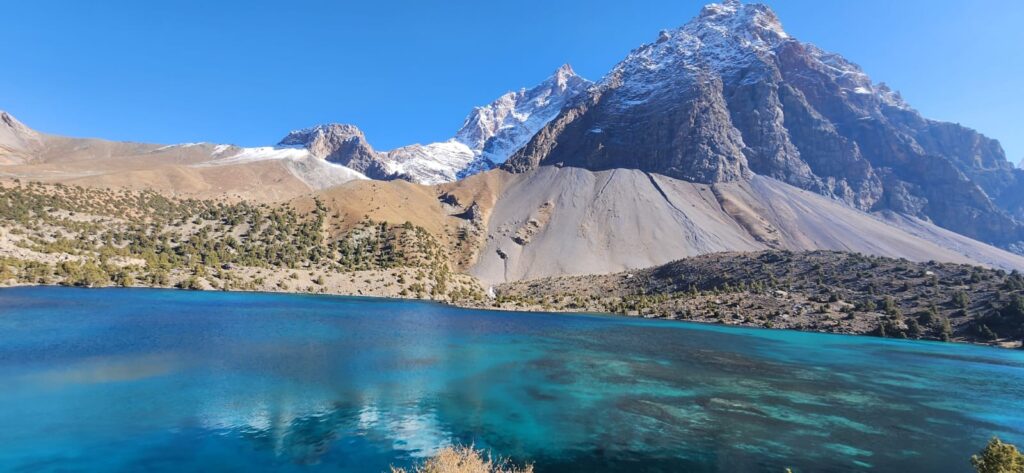
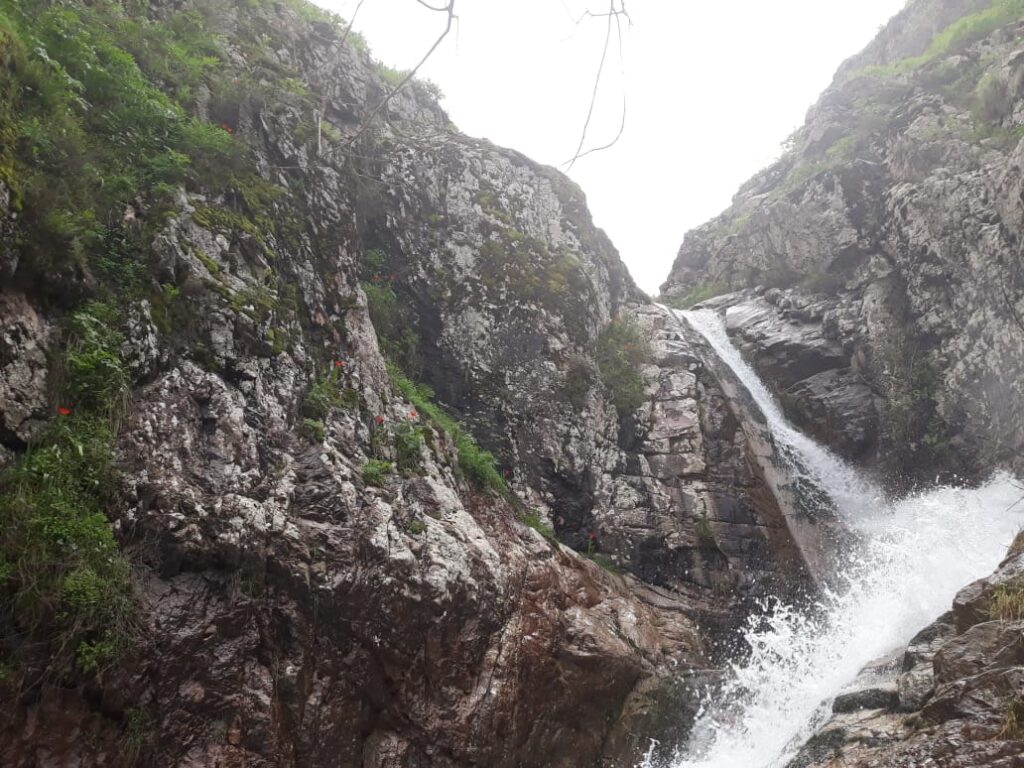
The Tajik Basin, nestled between the Pamir Mountains to the east and the Afghan-Tien Shan ranges to the west, is one of Central Asia’s most complex sedimentary depressions. It records the ongoing convergence between the Indian and Eurasian plates, capturing millions of years of tectonic shortening, folding, and crustal thickening. Its thick Mesozoic–Cenozoic strata preserve both the history of the Tethys Ocean’s final closure and the subsequent uplift of the Pamir orogenic system.
During the late Mesozoic to Paleogene, the Tajik Basin developed as a foreland depression, receiving sediments derived from eroding orogenic belts to the south and north. This accumulation reached several kilometers in thickness, with widespread evaporitic intervals—notably halite and gypsum layers—forming during restricted marine incursions. These salt units later played a pivotal role in controlling deformation during compressional tectonics.
The most recent experimental and numerical models, including those presented by Wei et al. (2024), demonstrate that salt behaves as a ductile substrate, allowing overlying sedimentary layers to decouple from deeper structural levels. In the Tajik Basin, such detachment led to large-scale fold-thrust systems and complex disharmonic folding patterns. These deformations vary in intensity from the basin margins toward its central depocenter, reflecting differential stress transmission across halite-dominated intervals.
Wei et al. reproduced these processes using physical sandbox modeling, showing that salt flow significantly localizes deformation in the overburden. The results align with field and seismic observations from southwestern Tajikistan, where salt diapirs and detached thrust sheets dominate the subsurface geometry. This salt-related deformation not only affects the structural architecture but also influences fluid migration pathways—making it a critical factor for hydrocarbon accumulation in the region (Shoymuratov et al., 2024).
The tectonic evolution of the Tajik Basin cannot be separated from the broader geodynamics of the India–Eurasia collision zone. The ongoing indentation of the Pamir block into the basin causes crustal shortening and lateral extrusion. Modern geophysical data reveal active folding, thrust faulting, and seismic activity along the basin’s southern and western boundaries, consistent with contemporary GPS-derived strain fields.
The Tajik Basin represents one of the few locations where active salt tectonics directly interacts with continental collision processes, creating a unique natural laboratory for understanding mountain building and sedimentary deformation in foreland settings.
The interbedding of competent sandstone–limestone units with ductile salt sequences facilitates a multi-level deformation style, where deep-seated compressional stresses are absorbed and redistributed upward. This complex coupling between brittle and ductile layers has led to structural traps favorable for oil and gas accumulation—particularly in Mesozoic and early Cenozoic units sealed by evaporites.
Recent field studies and seismic interpretations have begun to quantify the rates of deformation and the mechanical behavior of the salt layers under present-day stress conditions. However, uncertainties remain concerning the timing of halokinesis, the interaction between salt tectonics and fault reactivation, and the thermal history of the basin. Advances in thermochronology, magnetostratigraphy, and subsurface imaging are expected to refine the geodynamic models in coming years.
Environmental aspects are also drawing attention: active uplift and salt mobility may influence groundwater salinity and slope stability in the region, factors critical for infrastructure development and hazard mitigation.
Understanding the structural evolution of the Tajik Basin is not only a geological challenge but also a strategic necessity for managing natural resources and assessing geohazards in a rapidly developing Central Asia.
References
- Wei, X., Li, Y., Zhang, L., et al. (2024). Physical modeling of salt structural deformation in the Tajik Basin. Frontiers in Earth Science, 12, 1478591. https://doi.org/10.3389/feart.2024.1478591
- Shoymuratov, A., Ismoilov, B., & Tursunov, D. (2024). Geological aspect and oil and gas potential of the Mesozoic and Cenozoic units of the Tajik Depression (SW Tajikistan). International Journal of Earth Sciences Knowledge and Applications, 6(1), 446. https://www.ijeska.com/article/view/446
- Burtman, V.S., & Molnar, P. (1993). Geologic and geophysical evidence for deep subduction of continental crust beneath the Pamir. Geological Society of America Special Paper, 281, 1–76.