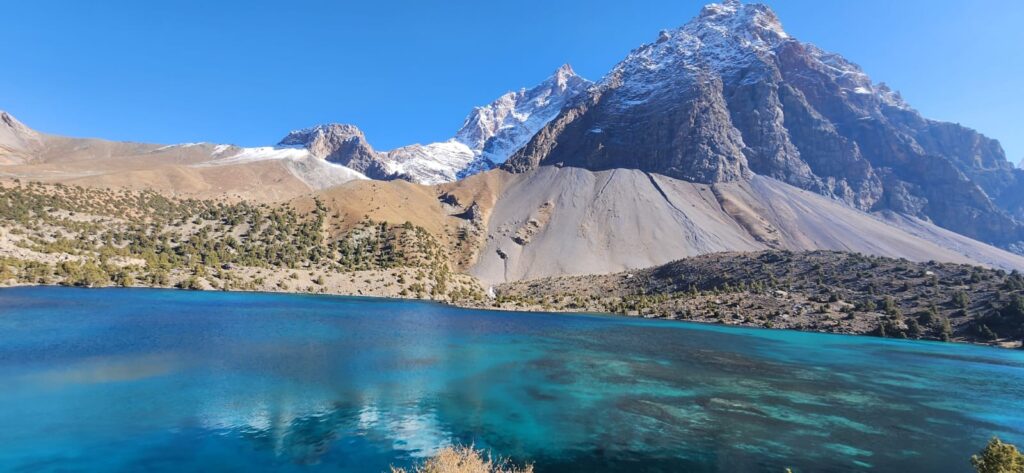
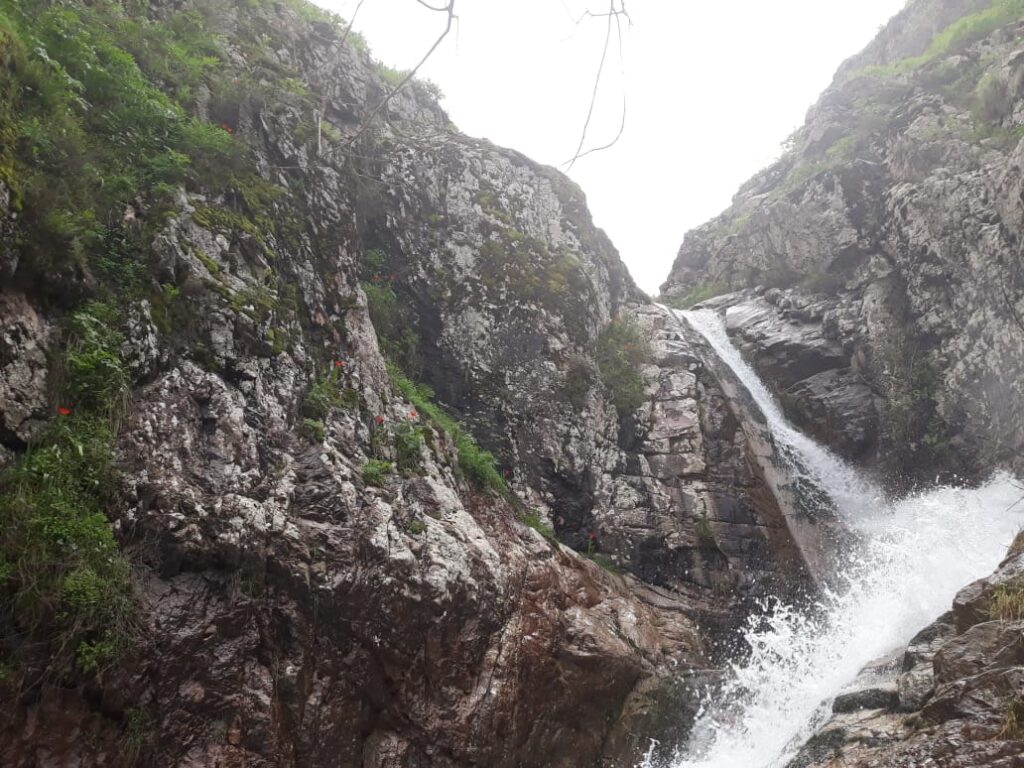
Tajikistan is a land of towering mountains and deep valleys, where tectonic processes have sculpted both dramatic landscapes and a wealth of mineral resources. Though the country is small by area, its crust contains a diverse suite of metallic and non-metallic minerals that have drawn scientific and economic attention for more than a century. The Pamir–Tien Shan metallogenic belt, which extends across Tajikistan, Kyrgyzstan, and western China, ranks among the world’s most geologically complex and resource-rich regions. Understanding the distribution, genesis, and sustainable management of these mineral resources is essential for Tajikistan’s long-term economic resilience.
Tajikistan’s geology is defined by the ongoing collision between the Indian and Eurasian plates, a process that continues to raise the Pamir Mountains and deform the surrounding basins. This convergence reactivated older Paleozoic basement structures and generated multiple metallogenic zones, each corresponding to specific magmatic and tectonic episodes.
The northern part of the country, within the Gissar–Zarafshan zone, records Paleozoic volcanic-arc assemblages intruded by granitic plutons. These provide the setting for tungsten, molybdenum, and tin mineralization. The central and southern zones, including the Pamir terranes, contain Mesozoic to Cenozoic magmatic arcs related to subduction and continental collision, hosting copper–gold–molybdenum porphyries and skarn systems. In contrast, western Tajikistan, encompassing the Tajik Depression, preserves thick sedimentary sequences enriched in evaporites, gypsum, and halite, as well as stratabound lead–zinc–silver mineralization.
This tectonic mosaic has produced more than 400 known deposits and occurrences, ranging from ancient mercury–antimony workings to newly recognized rare-earth element prospects.
Gold and silver occur primarily in hydrothermal and placer settings. The Taror, Jilau, and Kumargi Bolo deposits in the western Pamirs represent some of the most significant precious-metal accumulations in Central Asia. These orogenic-type deposits formed when deep-circulating fluids, driven by regional metamorphism, precipitated gold along fault zones cutting Proterozoic and Paleozoic rocks. Secondary placer deposits continue to be mined on a small scale along major river systems.
Copper and molybdenum mineralization is concentrated in the central Pamir arc, where Late Cretaceous to Paleogene subduction generated calc-alkaline intrusions. The porphyry systems near Alichur and Murghab contain disseminated chalcopyrite and molybdenite, often accompanied by magnetite and quartz-sericite alteration. These deposits, described by Li et al. (2023), share similarities with world-class porphyry provinces in Mongolia and Tibet.
Antimony and mercury, once the backbone of Tajikistan’s mining industry, are found in the Dzhidzhikrut and Konchoch regions. They occur in hydrothermal veins hosted by Carboniferous limestones and andesitic volcanics, typically associated with stibnite, cinnabar, and realgar. Although many of these mines were active during the Soviet era, modern re-evaluation has revealed deeper extensions that remain unexploited.
Lead, zinc, and silver are widespread in carbonate-hosted and skarn deposits of the Gissar Range. These stratabound bodies display classic Mississippi Valley-type characteristics, formed by low-temperature fluids migrating through permeable dolostones. Geochemical surveys continue to identify new anomalies across the region, particularly near Khatlon and Ayni.
Tajikistan’s metallic wealth reflects over 500 million years of tectonic evolution—from Paleozoic subduction arcs to Cenozoic collision zones—each leaving behind a distinct metallogenic fingerprint.
Beyond metals, Tajikistan possesses vast industrial mineral resources that sustain local construction and chemical industries. Thick evaporite sequences in the Tajik Basin contain billions of tonnes of rock salt, as well as gypsum, anhydrite, and potash. These materials are extracted for domestic use and export to neighboring countries.
High-purity limestone and marble deposits are quarried in the Gissar and Karatag areas, supporting the cement and decorative stone industries. Barite, fluorite, and phosphate occurrences add to the non-metallic potential, while coal and minor uranium deposits testify to past energy-related exploration efforts.
The challenge lies not in resource scarcity but in infrastructure and investment capacity. Many deposits are located in remote high-altitude terrain with limited access roads, electricity, and processing facilities.
Recent years have seen renewed exploration interest supported by digital mapping, satellite remote sensing, and geochemical surveys. The Geological Survey of Tajikistan and international partners are compiling GIS-based metallogenic databases that integrate spectral, magnetic, and gravity datasets. Portable X-ray fluorescence (pXRF) and drone photogrammetry are increasingly used to delineate alteration zones and structure-controlled mineralization in the field.
Integration of geological, geophysical, and geochemical data allows for predictive modeling of undiscovered resources. In particular, machine-learning algorithms trained on known deposit signatures are being tested to identify potential targets in underexplored terrain. These innovations reduce exploration costs and environmental footprint, aligning with modern sustainable mining principles.
Mining contributes roughly 5–7 % of Tajikistan’s GDP, but analysts project that responsible expansion could double this figure within the next decade. The government’s National Strategy for Mineral Resource Development emphasizes attracting foreign investment, improving transparency, and updating regulatory frameworks. Partnerships with neighboring Kyrgyzstan and China focus on shared infrastructure and cross-border processing facilities.
However, increased activity brings environmental and social challenges. Tailings management, water contamination, and land degradation have been concerns at several legacy sites. Implementing international best practices—such as ISO 14001 environmental standards, community engagement, and independent monitoring—will be essential to ensure that resource development benefits local populations without compromising ecosystems.
The future of Tajikistan’s mineral sector lies not only in new discoveries but in building a sustainable, transparent framework that converts geological potential into lasting social and economic value.
As global demand grows for critical minerals such as tungsten, molybdenum, and rare earth elements, Tajikistan’s strategic location and geological endowment offer major opportunities. Continued collaboration between national institutions, universities, and international research networks will refine understanding of ore-forming processes and guide environmentally responsible exploration.
By embracing innovation and sustainability, Tajikistan can position itself as a model for mountainous resource economies—a country where geology, technology, and stewardship converge to unlock wealth while preserving natural heritage.
References
- Lee, J. (2025). An Overview of Mineral Resources in Tajikistan. Korean Society of Earth and Environmental Geosciences Journal. https://www.kseeg.org/journal/view.html?uid=2299&vmd=Full
- Li, J., Wang, Z., Chen, Y., et al. (2023). Petrogenesis and metallogenic significance of Late Cretaceous–Paleogene magmatism in the Pamir area, Tajikistan. Frontiers in Earth Science, 11, 1289000.
- Abdushukurov, R., Rakhimov, S., & Kurbanov, A. (2021). Geochemical and Isotope Anomalies in Sioma River Gorge, Western Tajikistan. Earth, 1(2), 13.