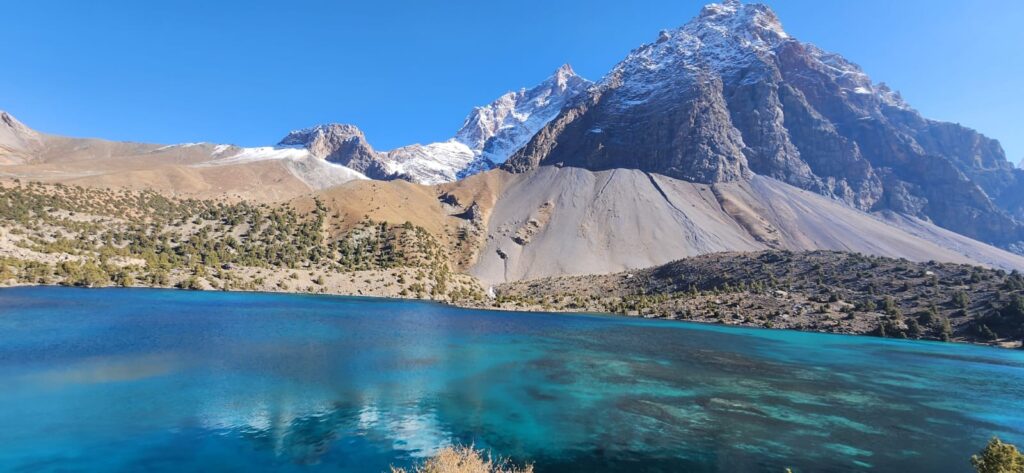
Western Tajikistan, stretching from the Vakhsh River basin to the foothills of the Gissar Range, forms a transitional zone between the Tajik Depression and the uplifted Pamir-Tien Shan orogens. This area hosts a complex mixture of sedimentary, volcanic, and metamorphic formations that have undergone multiple stages of deformation and hydrothermal alteration. Its geochemical landscape provides valuable clues to both mineral resource potential and environmental processes shaping Central Asia’s interior.
The region’s basement comprises Paleozoic metamorphic and intrusive complexes overlain by Mesozoic–Cenozoic clastic and carbonate successions. These strata record the gradual transition from marine deposition to continental sedimentation as the Tethyan oceanic realm retreated northward. Late Cenozoic compression associated with the India–Eurasia collision reactivated pre-existing faults, creating zones of enhanced permeability that became pathways for hydrothermal fluids.
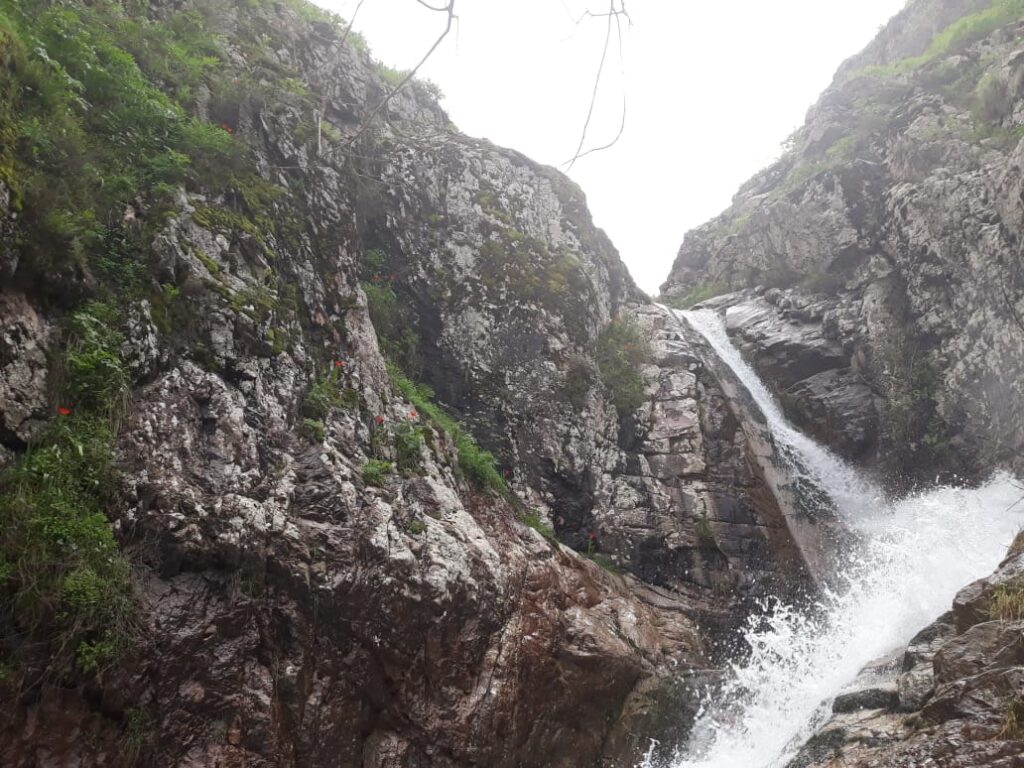
Field surveys conducted in the Sioma River Gorge and adjacent areas reveal widespread silicification, oxidation, and carbonate replacement. These features are associated with geochemical anomalies in elements such as copper, lead, zinc, and arsenic, suggesting an interplay between deep-seated magmatic fluids and surface groundwater systems.
According to Abdushukurov et al. (2021), anomalous enrichments in Cu, Pb, Zn, Ag, and Mo are accompanied by elevated concentrations of rare-earth elements (REEs) within altered limestones and volcanic tuffs. Stable-isotope ratios (δ¹³C, δ¹⁸O, ⁸⁷Sr/⁸⁶Sr) indicate a mixed source of hydrothermal and meteoric waters, implying circulation of mineralizing fluids along fault-controlled conduits.
The presence of negative Eu anomalies in REE patterns reflects oxidizing conditions and extensive fluid–rock interaction during mineral deposition. Geochemical dispersion halos extend several kilometers beyond visible alteration zones, hinting at a broad subsurface mineralized system.
The Sioma River Gorge represents one of the most promising localities in western Tajikistan where geochemical anomalies outline a concealed polymetallic mineral system, linking surface signals to deep hydrothermal activity.
While these anomalies highlight economic potential, they also mark zones of natural metal enrichment that may influence soil and water quality. Groundwater samples downstream from altered zones show locally elevated concentrations of Cu and As, though generally below WHO thresholds. Monitoring these trace-metal fluxes is important for balancing mineral exploration with environmental protection.
Modern exploration approaches—combining portable X-ray fluorescence (pXRF) mapping, remote sensing, and isotopic fingerprinting—allow rapid identification of alteration halos even in remote terrains. Integrating these tools with existing geological maps can refine prospectivity models for copper-lead-zinc and rare-earth element resources across western Tajikistan.
Understanding the geochemical baseline of Tajikistan is essential not only for discovering new mineral resources but also for managing environmental quality and sustainable land use in the country’s most densely populated western valleys.
Western Tajikistan’s complex geochemical patterns reflect the combined effects of tectonic reactivation, hydrothermal circulation, and surface weathering. Continued field sampling, isotopic studies, and geophysical surveys will help distinguish economic mineralization from background variations. These insights contribute to both resource development and environmental stewardship in one of Central Asia’s most geologically dynamic regions.
References
- Abdushukurov, R., Rakhimov, S., & Kurbanov, A. (2021). Geochemical and Isotope Anomalies in Sioma River Gorge, Western Tajikistan. Earth, 1(2), 13. https://doi.org/10.3390/earth1020013
- Shoymuratov, A., et al. (2024). Geological aspect and oil and gas potential of the Mesozoic and Cenozoic units of the Tajik Depression (SW Tajikistan). IJESKA, 6(1), 446
- Li, J., et al. (2023). Petrogenesis and metallogenic significance of Late Cretaceous–Paleogene magmatism in the Pamir area, Tajikistan. Frontiers in Earth Science, 11, 1289000.