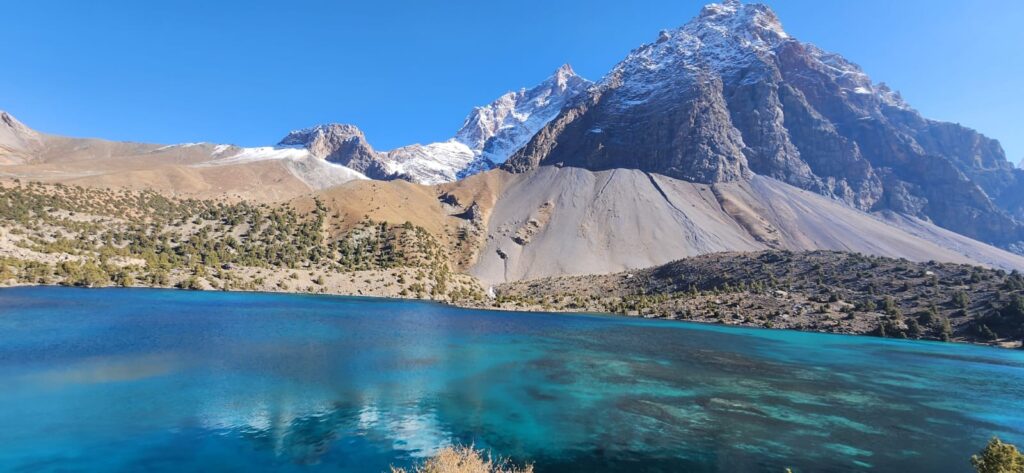
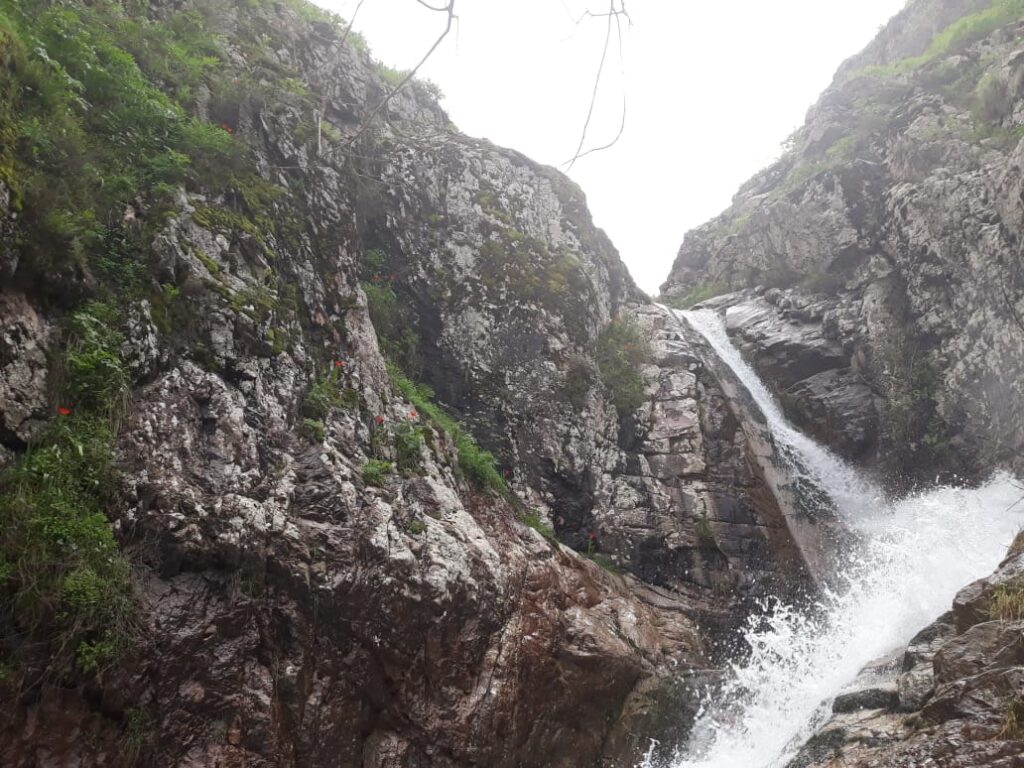
Mountain weather in Tajikistan is an act of improvisation. Clouds form out of nowhere; snow falls on one slope while sunlight burns on another. The meteorologist’s map is less a forecast than a portrait of volatility. In a country where more than ninety percent of the territory is mountainous, weather is not background—it is the main geography itself.
Mountains create their own time. The air moves differently here, folding over ridges, rising and cooling, inventing its own seasons within a day.
The challenge of predicting this weather is as old as the mountains. Soviet meteorologists stationed in the Pamirs during the 1930s called the region “a laboratory of the atmosphere” (Barotov, 1941). They learned quickly that classical synoptic models, built for plains, failed here. A low-pressure system in the Ferghana Valley could send sudden snow to the Gissar range while leaving Dushanbe dry. Valleys acted as amplifiers; wind could reverse direction within an hour. The combination of relief, altitude, and thermal contrast made every prediction partial.
Modern meteorology still wrestles with that same topographic chaos, though the tools have changed. Tajikistan’s Hydromet Service operates around 80 active observation sites, many perched between 2,000 and 4,000 meters. Automatic weather stations—some solar-powered, some still read by hand—dot the Gorno-Badakhshan Autonomous Region. These sensors collect data on temperature, humidity, wind, and snow depth, feeding into regional climate models. Yet even with this network, uncertainty persists. Between stations, entire valleys go unmeasured, and microclimates slip through the grid like wind through a sieve (Kayumov et al., 2019).
Every forecast in the Pamirs is an act of translation—from the mountain’s language into ours.
Recent research has begun to map that unpredictability rather than erase it. Using satellite data from MODIS and Sentinel platforms, climatologists have constructed high-resolution models of temperature gradients across elevation. One study found that temperature lapse rates—the rate of cooling with altitude—vary significantly within the same valley, influenced by slope orientation and land cover (Rahmonov et al., 2020). North-facing slopes cool faster and hold snow longer; south-facing slopes, bare and rocky, radiate heat. These variations create hyper-local climates that defy simple models.
In the Zeravshan and Vakhsh valleys, field teams now use drones to track cloud formation and wind shear. The images reveal weather behaving like geography—bounded by contour, driven by terrain. “When the mountain rises, the air must decide,” explains meteorologist Gulnora Dzhuraeva, who has spent two decades studying orographic clouds in the Pamirs. “It climbs, it cools, it changes. Every ridge is a laboratory.”
Climate change adds another layer of complexity. Rising temperatures have altered snowlines and humidity gradients, destabilizing the timing of precipitation. In the 1960s, snow typically began accumulating above 2,000 meters in late November; today it starts nearly a month later (Kayumov, 2022). The melt season has lengthened as well, changing river hydrographs downstream. What used to be reliable spring melt is now punctuated by erratic pulses, flash floods, and sudden thaws. For farmers and engineers alike, this means that weather forecasting is no longer just about comfort—it is about survival.
To address this, scientists at the Tajik Academy of Sciences have developed a new generation of mesoscale weather models tailored to the country’s geography. The “PAMIR-MET” system, launched in 2021, integrates topographic data, satellite observations, and machine learning algorithms. Instead of smoothing out terrain, it embraces it—allowing forecasts to reflect microclimate variation at scales of 1 kilometer or less (Ismoilov et al., 2021). Early results show a 25% improvement in precipitation prediction, especially for localized convective storms.
Mapping unpredictability is not about making the mountains behave—it’s about learning their rhythm.
But technology alone cannot resolve the cultural geography of weather. For herders, farmers, and road workers, forecasts still compete with experience. Many rely on observation: the behavior of birds, the clarity of stars, or the scent of the wind at dusk. In the Yaghnob Valley, elders still practice hava-shinosi, or “sky-knowing,” passing oral calendars of weather cycles. “If the sky burns red behind the west ridge,” one proverb says, “the wind will walk all night.” Scientists have begun to recognize the empirical precision of such knowledge, incorporating local signs into community-based monitoring programs (UNDP, 2020).
These hybrid systems—combining satellite eyes with human memory—represent a new way of mapping unpredictability. In GBAO, schools now teach children to log weather events on simple forms that link to mobile apps. A flash flood, a snowfall, a temperature spike: each report fills in the blank spaces between stations. Over time, these local records enrich national datasets and feed back into forecasts. “We are not reducing uncertainty,” says hydrometeorologist Davlatov, “we are mapping it.”
If one were to visualize this effort, the resulting map would look less like lines and more like breathing—weather expanding and contracting across the ranges, pulsing through valleys, dissolving and reforming. It’s a geography in motion, drawn not to fix the future but to live with it.
In Tajikistan’s mountains, the weather is not something to be predicted—it is something to be respected. To map it is to admit that change is the rule, not the exception.
The pursuit of that understanding defines Tajik geography today. By embracing uncertainty rather than denying it, meteorologists, geographers, and local observers together chart a landscape that is both physical and temporal. Mountains will always surprise; what changes is our capacity to listen to their signals.
References
- Barotov, S. (1941). Meteorological Studies in the Pamir Highlands. Moscow: Academy of Sciences of the USSR.
- Ismoilov, G., Rahmonov, R., & Davlatov, A. (2021). Orographic modeling of precipitation in the Pamirs using high-resolution weather models. Tajik Journal of Geography and Climate Studies, 9(2), 55–71.
- Kayumov, A., et al. (2019). Mountain meteorology and climate monitoring in Tajikistan: Challenges and innovations. Central Asian Geosciences, 11(3), 121–143.
- Kayumov, A. (2022). Changing snowline altitudes and temperature trends in the Pamirs. Geography and Environment of Tajikistan, 14(1), 33–51.
- Rahmonov, R., & Dzhuraeva, G. (2020). Slope orientation effects on temperature lapse rates in Tajik mountain valleys. Journal of Mountain Meteorology, 8(1), 17–29.
- UNDP. (2020). Community-Based Climate Observation Systems in Central Asia: Lessons from Tajikistan. Dushanbe: United Nations Development Programme.