
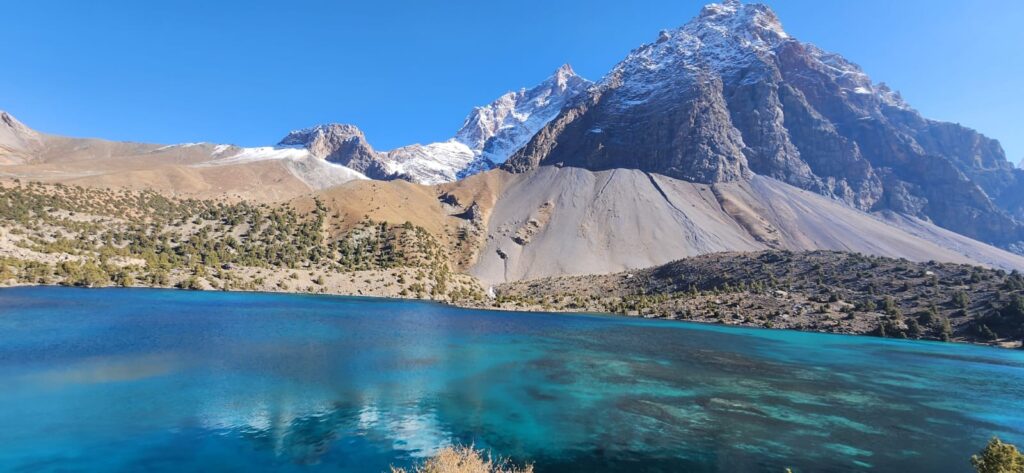
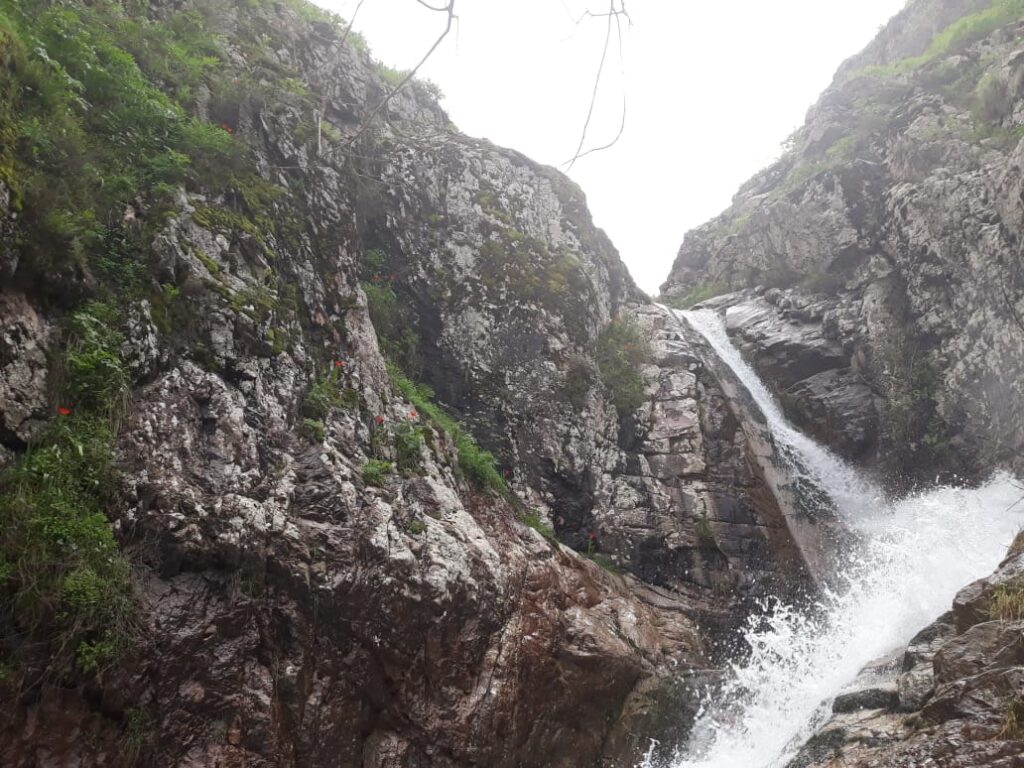
Across the narrow valleys of Tajikistan, where rivers fall fast and villages cling to slopes far from the national grid, hydropower has taken on a new geography. Not the monumental kind of Soviet-era dams like Nurek or Baipaza, but a network of smaller, quieter installations—micro-hydropower stations built along tributaries, canals, and alpine streams. These rural hydropower systems light single villages or clusters of homes, spinning turbines powered by meltwater and gravity. They have become not just energy projects but experiments in how geography itself can generate resilience.
In places like Rasht, Bartang, and Alichur, electricity flows where the river runs. A one-meter head of water through a hand-built turbine can keep a school lit, a clinic refrigerator running, and a line of houses warm through the long mountain night. Many of these stations are built with local labor, refurbished equipment, or aid-funded kits. Each is unique because each must adapt to terrain—the slope of the channel, the winter flow, the risk of freezing intake pipes. Energy in these mountains is not only a technical system; it is a hydrological negotiation.
Rural hydropower microgrids turn geography into an ally rather than an obstacle. They transform the steep, narrow, and remote—traits once seen as limitations—into the very sources of power.
The history of these installations mirrors Tajikistan’s geography of isolation. After the civil war of the 1990s, many remote districts saw their grid connections deteriorate or fail entirely. Diesel generators filled the gap but were costly and polluting. Around the early 2000s, small hydropower emerged as a practical alternative. Mountain villages already understood the rivers’ moods—the spring floods, the winter freezes, the channels that could be diverted without undermining slopes. Local tinkerers adapted old turbines from irrigation pumps or vehicle parts, creating what some engineers called “hydro-craft”: systems that blended local knowledge with minimal external inputs (Khamidov et al., 2014).
A 2012 survey by the Aga Khan Foundation counted over 50 functioning micro-hydropower plants (MHPs) in Gorno-Badakhshan, most producing between 5 and 100 kilowatts. Some were community-owned; others belonged to cooperatives or small entrepreneurs who sold electricity by the kilowatt-hour. These microgrids, though modest, collectively generated over 2 megawatts—enough to cover the basic needs of several thousand households. In the village of Jelondy, a 35 kW turbine powers homes, a school, and a small wool workshop. “The power comes from our river,” said one resident, “so it is ours to share.” That statement carries both pride and pragmatism: in places unreachable by national infrastructure, ownership follows geography, not politics.
Energy in mountain environments is profoundly local. Flow rates shift with meltwater; ice storms stall turbines; sediment clogs intake pipes. Every functioning microgrid is a small act of geographic calibration.
The physical geography of Tajikistan favors this approach. Steep gradients mean small watercourses have sufficient head for turbines without large reservoirs. The abundance of perennial streams allows distributed siting. But the same geography demands maintenance: flash floods can wash away intake structures, while landslides can sever penstocks. Seasonal sediment loads from glacial meltwater require filters or periodic flushing. Engineers describe a balance between permanence and adaptability—micro-hydro systems are intentionally small enough to rebuild when rivers change course.
Ecologically, micro-hydropower leaves a lighter footprint than large dams. There are no vast inundations, no displaced valleys, no major barrier to fish migration. Yet cumulative impacts can arise if many installations divert water simultaneously. In the Varzob basin near Dushanbe, a cluster of small hydro units occasionally reduces downstream flow enough to alter riparian vegetation (Rahmonov et al., 2019). This introduces a geographic paradox: small systems solve local problems but can collectively reshape basin hydrology if poorly coordinated.
Still, rural hydropower has become central to Tajikistan’s adaptation strategy for both energy security and climate resilience. In winter, when national power shortages peak, local microgrids provide stability. Many projects now integrate hybrid systems—combining small hydro with solar or wind—to smooth fluctuations when rivers freeze. Geographic diversity itself becomes an advantage: solar excels in clear winter conditions, hydro in the melt season. Villages like Zong in Bartang valley operate on this dual logic, wiring panels and penstocks together.
The spatial distribution of these microgrids also reveals social geography. They cluster along tributaries with consistent flow, near permanent villages, and in districts where community organization is strong enough to maintain them. Where outmigration has emptied valleys, systems fail not from technical faults but from absence. In that sense, energy geography and demographic geography are intertwined. A working turbine implies a working community.
Quoting a field engineer involved in an installation near Khorog: “We design by the map, but we repair by the mountain. Every bend in the pipe has its own reason.” His remark captures the blend of science and intuition guiding these systems. You cannot standardize terrain, so you do not standardize the design; you improvise to fit the slope, the rock type, the freeze line.
Financially, micro-hydro thrives on modest ambition. Unlike grid-scale hydropower, which demands decades-long loans, these projects are financed through small grants or community pooling. International programs like UNDP’s Small Grants Programme and GIZ’s Rural Energy for Development fund dozens of such efforts. But the most enduring ones rely less on grants and more on local ownership—when villagers maintain the turbine themselves, repair becomes a civic act rather than a contract.
Technically, Tajikistan’s micro-hydro evolution aligns with broader shifts across the Himalayas and Hindu Kush. Research in Nepal and Pakistan shows similar constraints—glacial-fed flows, sediment abrasion, and freeze-thaw cycles—but also similar successes where community models persist (Clemens et al., 2020). The geography of steep headwater basins across Asia offers the same equation: where big grids fail, small rivers step in.
Rural hydropower does not electrify isolation—it redefines it. A lit house in a dark valley is not just a technical victory; it is a reassertion that geography can be lived with, not escaped from.
Looking ahead, the challenge will be coordination. As Tajikistan’s national electrification expands, some microgrids will connect to the main grid, others will fade. The test will be whether local hydropower remains an active layer of resilience rather than a relic of scarcity. Geography suggests it should. The mountains still flow, gravity still offers its quiet pull, and water still falls faster here than anywhere else in Central Asia.
References
- Khamidov, M., Pukhov, A., & Rahmonov, R. (2014). Micro-hydropower development in Tajikistan: Technical and economic perspectives. Renewable Energy Review, 9(2), 45–58.
- Rahmonov, R., Kayumov, A., & Baizoyev, M. (2019). Small-scale hydropower in Tajikistan: Environmental and hydrological impacts. Journal of Central Asian Water Studies, 5(1), 78–92.
- Clemens, M., Shrestha, P., & Haq, S. (2020). Micro-hydropower for mountainous regions: Lessons from community energy in South and Central Asia. Energy Policy, 136, 111044.