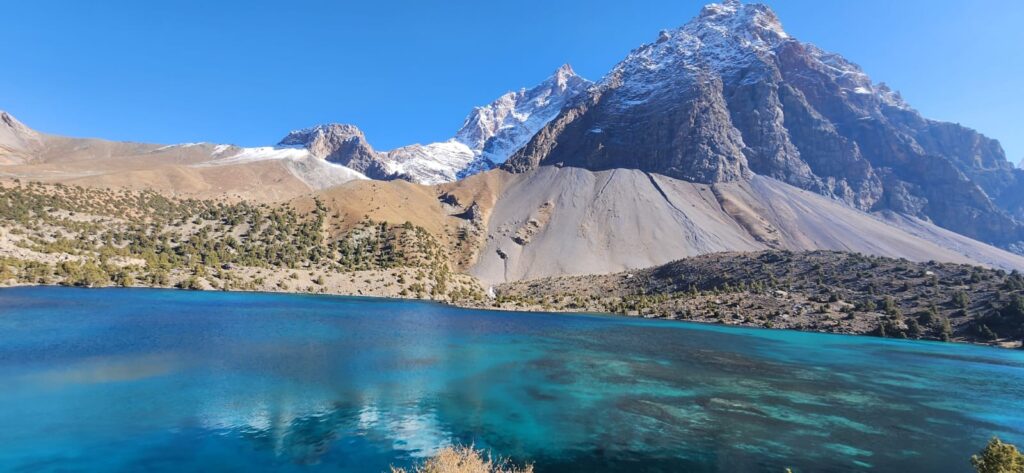
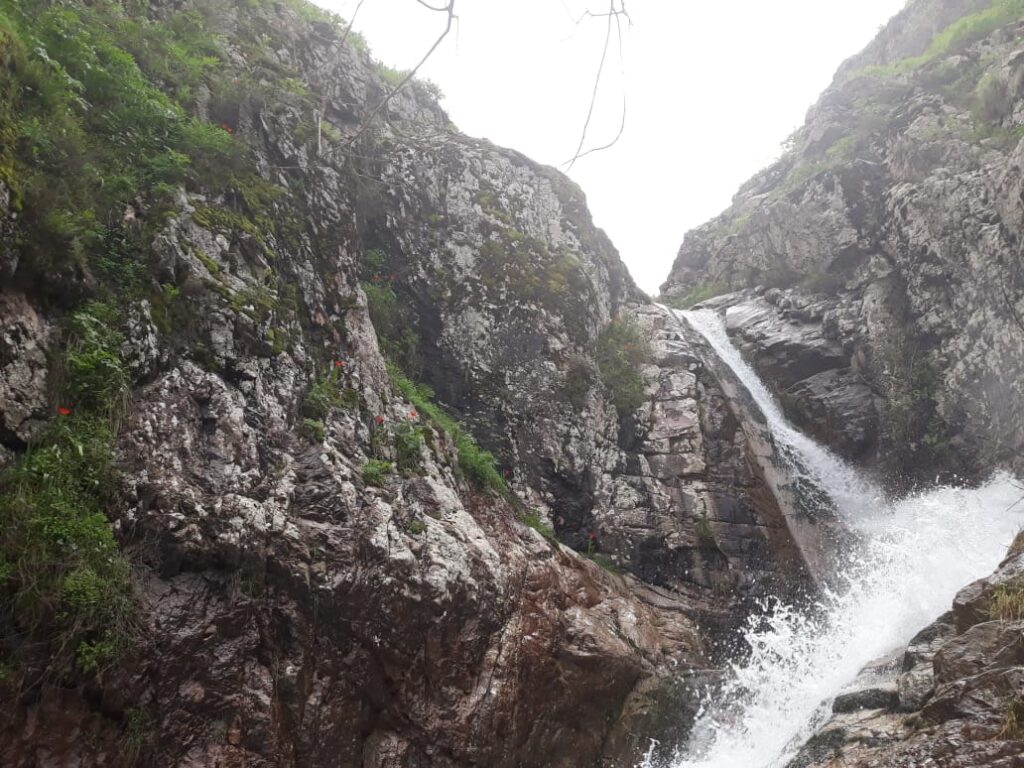
Snow leopards move like weather along the ridgelines of Tajikistan’s high mountains. You rarely see them, but you can read their passage in the landscape: a damp pad print on wind-scoured scree, the clean break of a hoof on a cliff where an ibex misjudged its leap, a string of scent marks on the only juniper in a stony bowl. In the Pamirs and the western Tian Shan, altitude and cold carve out a geography that suits them- broken slopes, ledges, gullies, and talus that hide both hunter and hunted. These cats are apex predators of a sparse world, their territories measured less in kilometers than in ridgelines, passes, and prey trails. As climate warms and land use shifts, that world is changing, and the changes are etched in terrain as much as in numbers.
Snow leopard country in Tajikistan begins around the upper bounds of juniper and shrub steppe, where goats and argali climb to feed. Above 3,500 meters, the vegetation thins to lichen, cushion plants, and scattered grasses that hold soil on impossible angles. The cats move across this vertical mosaic with long, energy-saving traverses, staying just below skyline when the light is harsh, dropping to creek beds at dusk. Field biologists speak the landscape as the cat reads it: ruggedness, slope angle, viewshed, kill-site cover. Habitat models here are maps of rock and shadow, showing how the animal’s needs align with the mountain’s geometry (McCarthy & Chapron, 2003; Johansson et al., 2016).
Landscape matters more than latitude for snow leopards. A hundred meters of broken cliff can be worth more than a kilometer of smooth pasture; a single saddle can connect two basins and two seasons. Their geography is not a colored polygon on a map but a network of steep places stitched together by the shortest safe lines.
In Gorno-Badakhshan, local herders know these lines. They point to ledges above winter corrals and say, “The ghost walks there.” One herder near Alichur described an evening when fresh snow recorded a quiet visitation: “We saw the track like a long question. It came down from the ridge, looked at the sheep, and then climbed again. It didn’t take one that night.” He was not romantic about it. Predators are facts in his ledger of loss and labor. But the observation captures how snow leopards work the terrain by testing, circling, waiting for a vulnerability that often comes not from the herd itself but from the mountain: ice on a path, a broken fence where meltwater undercut a post, the sudden fog that muddles both hoof and paw.
Prey defines the cat’s range. In Tajikistan, Siberian ibex and Marco Polo sheep anchor the menu in high basins, with marmots, hare, and domestic stock filling gaps seasonally. Ibex pick routes that minimize exposure to slopes where avalanches run; argali favor open benches where they can see far. Snow leopards key on those choices, positioning themselves on chokepoints and wind-sheltered shelves where scent gathers. Camera traps along ridge spines in the eastern Pamirs have recorded repeated use of narrow saddles by both prey and predator, a rhythm of passage that links basins and seasons (Kachel et al., 2017; Harris et al., 2014). Density estimates from camera-trap capture, recapture in Central Asian ranges suggest low but stable numbers where ruggedness and prey persist, with territories overlapping loosely along productive bands between 3,500 and 4,800 meters (Johansson et al., 2016).
The cat’s dependence on rugged, sparsely vegetated ground once insulated it from many human pressures. That insulation is thinning. As thermal belts shift upslope, plant communities and prey distributions track the change, and with them the routes that snow leopards have used for generations.
Warming has subtle, terrain-specific effects. In some basins, earlier snowmelt opens grass sooner on mid-elevation benches, pulling ibex and argali downslope in spring but pushing them higher in late summer when the lower forage dries. In dry years, small springs that anchor wildlife movement fail earlier, redistributing both prey and predator toward the few seep-fed patches that persist. The cats follow, which sometimes means more frequent crossings of tracks and roads cut for mining or seasonal herding. Where vehicle tracks climb into once-quiet basins, human scent and noise alter how and when prey move, shortening the twilight hours when cats hunt most efficiently.
Conflict on the edges of this range is as geographic as it is social. Corrals in wind-exposed saddles, placed there to minimize snow burial, also sit in view of cat routes; gaps in rock walls align with gullies that funnel scent and movement; night-time watering paths cross slopes where cats can approach unseen. Losses spike in years when marmots emerge late from hibernation or when ibex lambing is poor. A biologist in Murghab who helps trial “predator-proof” corrals put it plainly: “We are moving fences a few meters, raising walls by a few stones, and changing doors from east to south. It is geography at the scale of a pelt’s width.” Those small shifts matter, because they interrupt the most efficient approach angles and remove the easy opportunities that teach young cats to test corrals.
Transboundary terrain shapes Tajikistan’s populations as much as anything human does. The big cats do not read lines on maps; they read snow lines and rock lines. Home ranges in the east bleed into China, Afghanistan, and Kyrgyzstan along ridges that are safer than valley bottoms. In winter, when wind packs snow hard on sun-facing slopes, movement channels into the lee of ridges; in summer, cats cut below corniced crests to avoid heat. Genetic studies from Central Asia show connectivity across national borders where rugged corridors remain intact, and isolation where wide, human-altered valleys interrupt them (McCarthy & Chapron, 2003; Harris et al., 2014). For Tajikistan, that means the fate of “our” leopards is co-authored by catchments we share.
One field worker described a kill site above the Ghunt River. The ibex had slipped coming off a rib of rock; the cat had waited just beyond a blind corner where the slope steepened into a chute. You could read the story in scuffs and blood and the short drag to shade. Snow leopards conserve energy by using the slope’s logic- never forcing a chase where gravity will assist. The same logic guides their avoidance: they will walk hours to circle the noisy mouth of a valley road, then cross in the quiet of early morning where talus muffles their step.
Numbers on a page do not capture the quiet reorganizations underway. Shrub expansion in some mid-elevation zones changes sightlines and cover; livestock grazing patterns press higher in drought years to find green, bringing dogs and people into basins the cats once held to themselves. Prolonged low-flow seasons reduce the ephemeral wetlands that hold small prey; long heat waves shift diurnal activity, compressing effective hunting windows. None of this is dramatic in any given week. Over years, routes bend, home ranges stretch, and the ghost learns new hours and new lines.
Adaptation is happening on both sides of the predation line. Herders in a village near Jelondy rebuilt their winter enclosure with stone and wire mesh, raising the lintel and setting the door flush with a face of the windbreak rock. “Before, the cat took two in a night. Since we changed, none,” one man said. Another family moved lambing to a lower bench where the corral is backed by a cliff and the approach from above is open and easy to watch. These are not high-tech solutions; they are repairs to the geometry of risk. They buy time, as much for the cat, as for the people.
Scientists have been careful to frame snow leopard protection not as a fence around a species but as a set of guarantees for the mountain processes that sustain it. That means maintaining prey, protecting basins where argali lamb and ibex find winter forage, and keeping corridors of rugged ground intact between them. It also means not overpromising what any single reserve can do in a landscape where the cat’s life depends on movement across several. A reserve is a center of gravity, not a cage. The rest is ridges and time.
There is a temptation to measure all success in photographs. Camera traps capture a shoulder, a tail base, a soft paw lifted mid-step. They deliver proof and comfort in hard numbers: minimum number known alive, individual recaptures, cubs trailing a scarred female. The better measure, quiet and harder to show, is whether the routes they use still exist and whether the prey still climb those same ribs of rock at first light. The mountain decides that, more than any plan on paper.
At dusk on a clear evening above Alichur, the air goes thin and blue. A shadow moves along a contour line a quarter kilometer away, here and then not, working the same shelf that ibex have just left. Far below, a dog barks once and then stops. The wind shifts and brings the smell of cold stone. If you try to follow with your eyes, you will lose it. If you look the way the slope wants you to, you will catch the absence that is the cat: a small refusal of light against rock and snow, moving with the patience of a map that is still being drawn.
References
- Harris, R. B., Reading, R. P., Shank, C., & Bedunah, D. J. (2014). Central Asia’s wildlife: Diversity, management, and conservation. Springer.
- Johansson, Ö., McCarthy, T., Samelius, G., Andrén, H., Tumursukh, L., & Mishra, C. (2016). Snow leopard predation in a livestock-dominated landscape in Mongolia. Biological Conservation, 203, 188–195.
- Kachel, S. M., McCarthy, K. P., McCarthy, T. M., Oshurmamadov, N., & Hashim, H. (2017). Investigating the potential effects of road development on snow leopard habitat in the Pamirs. Cat News, 66, 22–26.
- McCarthy, T., & Chapron, G. (Eds.). (2003). Snow Leopards: Biodiversity of the World—Conservation from Genes to Landscapes. Academic Press.